Blog

All Things Bookish

Book reviews 

Hi everybody, I’m starting this new blog about every book I’m reading this year  and my views on it . The first book of the year:

A Little Life by Hanya Yanagihara

I normally never read any book over 500 pages in length, and that’s stretching it. So I’d been avoiding  A Little Life which goes up to 814 pages, but because my book club chose it as our next read— well, there you are. 

The story is about four college friends and their lives for the next three or so decades, but the focus is mainly on two, Jude and Willem. Especially Jude, the main character, who’s been sexually abused as a child. 

This book is not your typical novel and breaks quite a few rules. For one, there’s a lot of tell; two, there are no filters regarding some of the more sordid scenes, and three- it’s darned length! Novels have to be around 80-100,00 words long to keep the reader’s interest from flagging, we are told. But this one kept me hooked for all 814 pages and I stayed up until 5 am to finish it! 

What was it about this novel that made it so gut- wrenchingly unputdownable? ( I hate using that word as it’s got such a commercial zing to it, but can’t think of any other). Well, here we go.

The subject matter of child sexual abuse was dealt with honestly. It’s horrifyiong, but it’s true. Such things do happen. The author’s use of the third person close POV enabled her to go right into the heart and soul of the character. Her writing was without any kind of judgement or sentimentality. And she was not afraid of writing about feelings and emotions. I think emotions are such a large part of our lives and many authors don’t want to appear sentimental and maudlin so merely skim over these issues. But not this author. 

Published 10 years ago to critical acclaim, the book has valuable lessons for all of is. And it shows us life can be beautiful. 

American Fiction: critiquing stereotypes

Have you seen the movie ‘American Fiction’? It’s one of the funniest and most biting movies I’ve ever seen. Here’s the story (with no spoilers)

Monk, a frustrated black novelist/professor is fed up at the way black people are portrayed in novels and books, and how they are stereotyped. Especially jarring is when a black writer called Sinatra Golden writes a book called ‘We’s Lives in da Ghetto’ which becomes a runaway bestseller. Her book buys into all the common stereotypes of black people — unwanted pregnancies, violence, broken homes, etc. Although Monk writes literary fiction, none of his books sell. When he complains to his agent about books like Sinatra Golden’s, the agent tells him a truism: ‘White people think they want the truth but they don’t — they want to feel absolved.’ 

Monk then writes a satirical book under a fictitious name: Pafology by Stegg R. Leigh. It’s what he terms pure trash, buying into all the stereotypes of black people. But when it’s picked up by a leading publisher, and he is promised an advance of 75000$, he is stunned.He wants to withdraw the book, but his agent forces him not to. And, when the publishers are told he’s actually a fugitive on the run and therefore can’t show his face, they are even more delighted, as they think this is ‘the real thing!’

 When the publishers finally  do speak to him, he insists on renaming the novel with a naughty four-letter word, to which they surprisingly agree. Monk bangs his head in frustration. He is trapped in the very trope he is criticizing, as the book continues to win more and more accolades.

This movie, imo, is especially relevant for readers and writers. It’s a biting satire on race and identity, and especially about how Black people are represented in popular culture. 

For me, movies like ‘Slumdog Millionaire’ and some best-selling books on India that depict poverty and casteism are tired tropes. It’s not that poverty and casteism should be ignored or pushed under the carpet, but surely there’s more to India than these two issues.Especially poverty porn! 

What are some stereotypes that make you get hot under the collar in movies or books? I’d love to hear about them.

Hampton Court Palace – the India Connection

I’m in London, with it’s crazy weather of sunshine and rain and cold and heat all in one day. Right now, it’s raining ( not drizzling) and I’m enjoying the pitter-patter on the window sill.

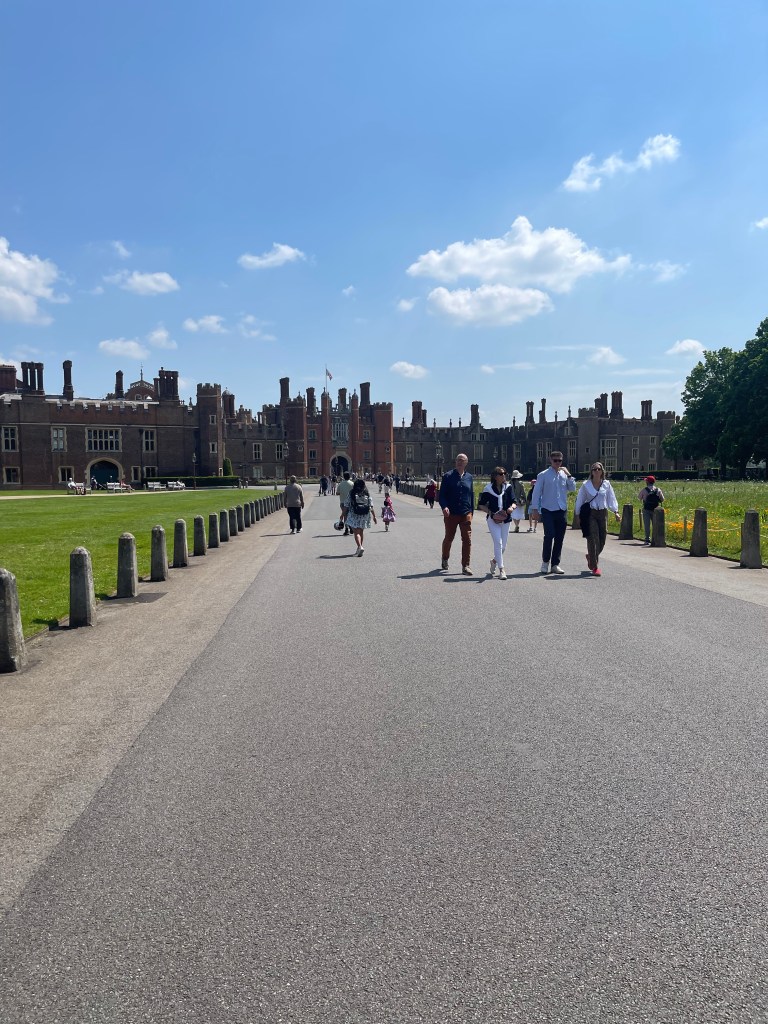
But the day before it was warm and sunny— in fact, almost hot, and that’s when we made a trip to Hampton Court Palace, which was one of the palaces of the colourful king, Henry V111 and his six wives. Despite having two little ones with us, we managed to do the grounds and some parts of the palace. (Below is a view of the palace. Truly awesome!)

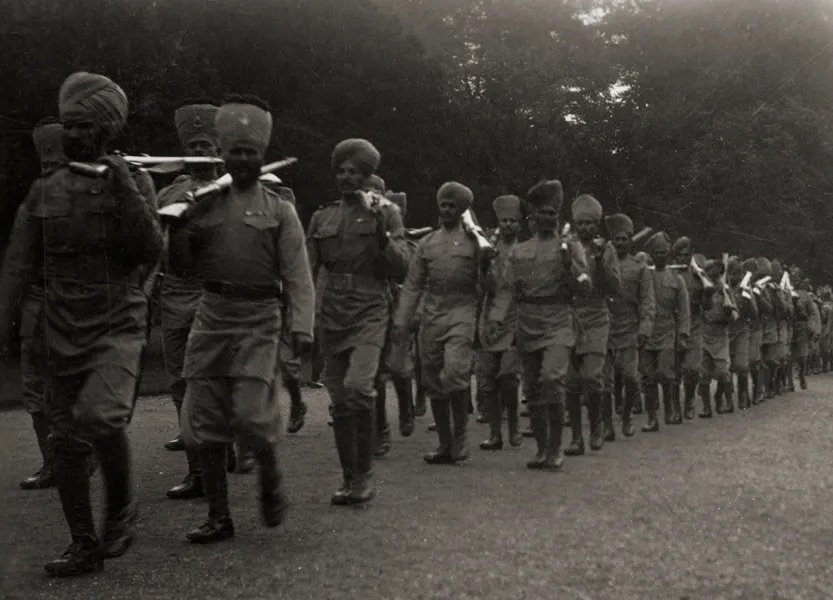
You’d never expect something so English, a Tudor palace, to have anything to do with India. But I was surprised to learn that a contingent of Indian troops actually camped on these palace grounds way back in 1919. They’d travelled all the way from Mumbai to take part in the Peace Celebrations post the First World War. The exhibition about them with photographs, videos, and their oral histories presented by their descendants was truly the highlight of this visit. (Below is a aphotograph taken from the site http://www.hrp.org.uk that shows the Indian troops who had arrived for the occasion)

Lest we forget- about 500,000 Indian soldiers fought this war alongside the British. King George the Vth had this to say:

I HEARTILY THANK ALL MY INDIAN SOLDIERS FOR THEIR LOYAL DEVOTION TO ME AND TO MY EMPIRE, AND FOR THEIR SUFFERINGS CHEERFULLY BORNE IN THE VARIOUS CAMPAIGNS IN WHICH THEY HAVE SERVED IN LANDS AND CLIMATES SO VERY DIFFERENT FROM THEIR OWN.

From King George V’s speech on August 2nd 1919

The part played by  Indian soldiers in this war does not have a happy ending. The promise of freedom or at least some amount of self rule was never kept. It would take many more years of protests and violence and yet another war to ultimately win this freedom. 

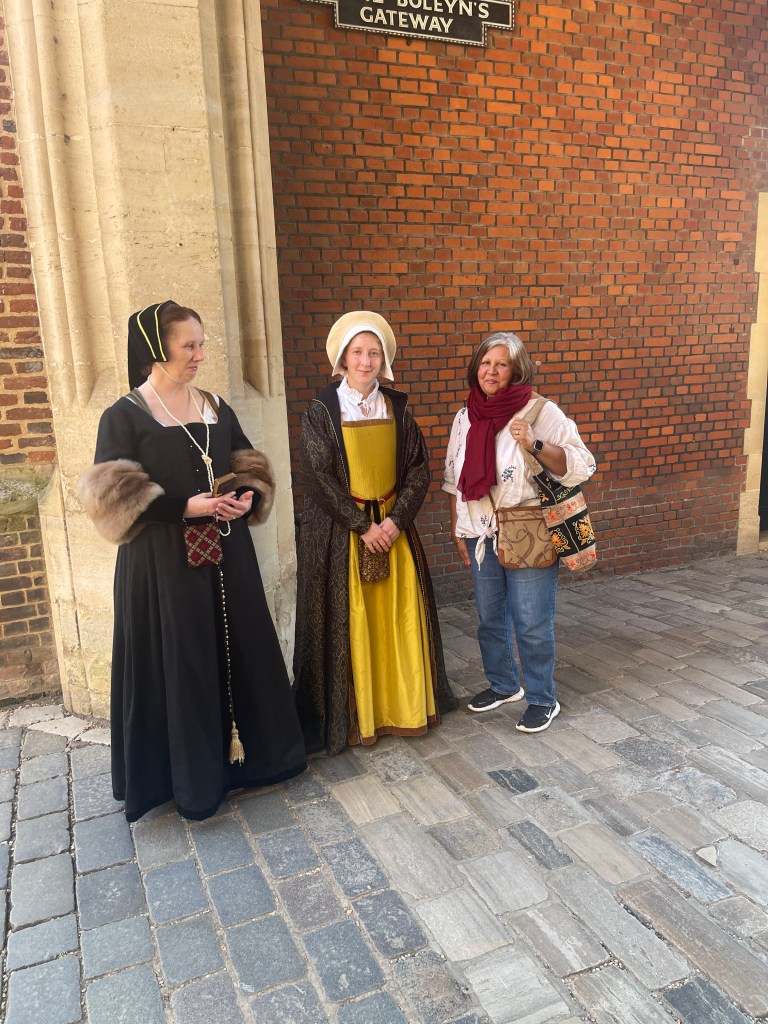
On a lighter note, I met some Tudor ladies and had a nice conversation with them. You can see them in the picture below. And the grandkids ended the day with a trip to the Magic Garden, which has all things to delight a child. 

War Diary: Datuk Balwant Singh Kler

img_3688

.

Ever since I was a child, I’ve been hearing stories from my (late) aunt of the turbulent times she underwent while living in Jesselton (present-day Kota Kinabalu) during World War 2, when the area was under Japanese occupation. I recently visited Kota Kinabalu to find out more, and was extremely lucky to meet a gentleman who’d not only lived through those war years but also remembered those times very well.

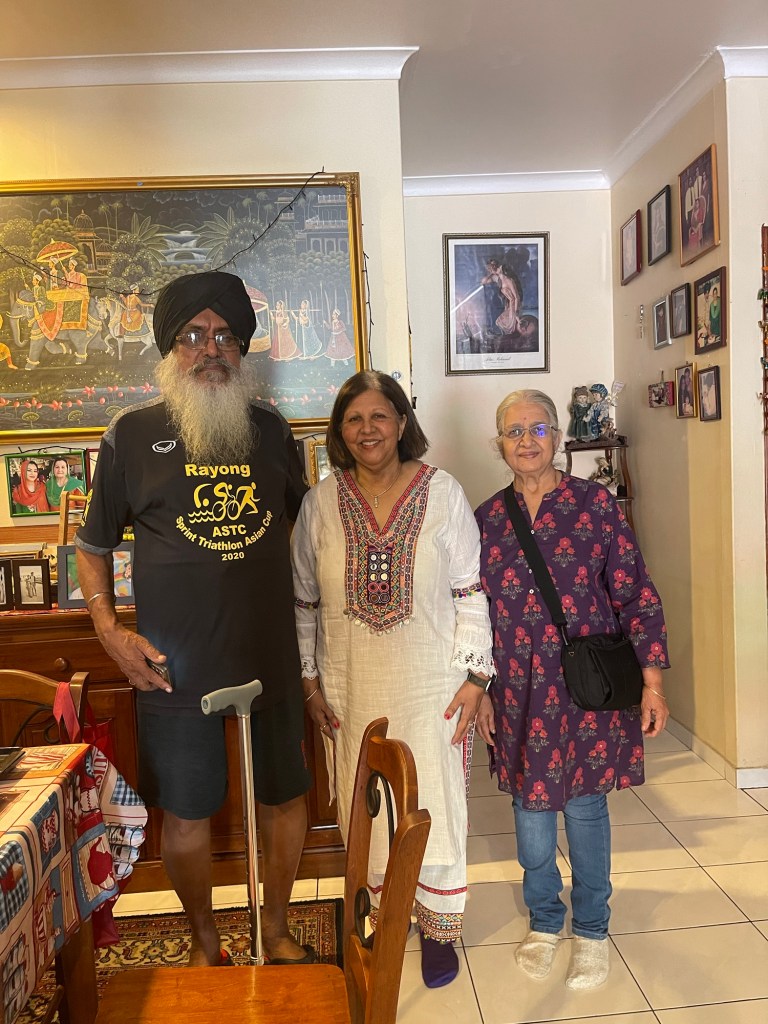
Datuk Balwant Singh Kler was just a young lad but recalls those days with utmost clarity. (‘Datuk’ is an honorary title in Malaysia conferrred on a person who distinguishes himself in his field, and in Balwant Singh Kler’s case, this was in Sports). He says the Japanese were ruthless towards those who they suspected of sympathising with the British. Most Indians supported Subhash Chandra Bose who openly defied the British, and many of the ex-soldiers of the British Indian army joined Bose’s Indian National Army. But the common people just wanted to survive, and kept their heads low, not openly defying the occupiers.

Life was hard, and every person eked out a living as best he or she could. Balwantji recalls that the only transportation was on cycle or on foot. Every time a local person saw a Japanese soldier or officer, they had to bow low. Food was in perenniel shortage. During the worst times, Balwantji recalls that his mother would grind tapioca which she’d mix with rice flour and make into ‘rotis’. A single roti kept their hunger at bay.

Balwant Singh had a couple of traumatic experiences. It seems the Japanese took away 75% of the locally grown food. His mother owned a few cows and chickens and also a small coconut plantation. She once refused to give the Japanese coconuts, and as punishment, she was tied to a tree near a nest of fire ants. A fire-ant’s bite is incredibly painful, and the poor lady suffered this torment for hours. Balwantji recalls that a local lady applied a salve of burnt tobacco leaves mixed with coconut oil, the only known cure for these bites.

If this sounds bad for a child of six or seven to witness, seeing his mother tortured in this fashion, something even worse was in store for him, an incident that haunted him for many years and affeced him both physically and mentally.

He had once taken their cows to a swampy area to hide them from the Japanese who’d otherwise confiscate them. It seems a lorry drove up, and some Japanese soldiers pushed out a Chinese man. Without realising a child was watching, they chopped off his head. Balwantji saw the blood spurt out and soiled his pants. Tthereafter, he says, for very many years, he had nightmares about this incident.

Balwantji also told me the heartwarming story of one of his friends meeting a Japanese soldier who hugged him and told him he reminded him of his son. The soldier had been a teacher who never wanted to fight this war, and was missing his family who he’d left far behind.

Even if we have not experienced war directly, someone in our family — a granddparent, an aunt or uncle– is usually the repositary of war tales. If you know any such stories, I’d love to hear them.

Until next time…

Padmini.

Going down the research-warren

(This blog does not include any images of the ship, SS Rajula, as these are subject to copyright)

Every writer worth his or her salt knows good research adds that extra layer of authenticity to their work. Research is especially important when you are writing historical fiction, and although you need not lay it on thick, it’s still important that you know what’s happening in the larger background of your characters.

But what do you do when the facts you have at hand are somewhat sketchy? Well, once again, your research comes in handy. These new facts that you acquire through research may not have actually taken place in the life of your protagonist, but they do provide a fairly sturdy framework for your story.

Let me give you an example. I’m researching a historical fiction novel loosely based on my aunt’s life in British North Borneo (BNB) during the Second World War, which was then under Japanese occupation. The facts that I do know are that my aunt left for BNB in 1938, setting sail from Madras harbour and finally reaching Singapore perhaps after two weeks.  She’d mentioned that their ship stopped at Nagapattinam near Madras for a few days, thereby extending the already long journey. From Singapore, she took a ferry or steamer to her new home in Jesselton, British North Borneo, (present-day Kota Kinabalu in the state of Sabah in Malaysia).

Now, these very sketchy facts leave a lot unsaid. What was the name of the ship she travelled on? Did she travel 2nd or 3rd Class? (I’m sure as the wife of a man working for the Survey Office, she and her husband would not have travelled 1st Class. That would have been reserved for the British officers or for maharajahs and nobility). How did she feel when she boarded the ship? Was she sea-sick? Did she make friends with other passengers? What kind of food was provided for them?

As you can see, entire chapters can be built up just around this voyage. But first, I had to know the name of the ship she probably travelled on.

Research told me that the British India Steam Navigation Company’s ships, then the biggest maritime company, plied the seven seas from India to the Far East to Africa. With the scant knowledge I had – port and month of departure, I finally could conclude that the ship my aunt probably boarded was named the SS Rajula. Of course, I wasn’t 100% sure of this, but I am not writing historical non-fiction but historical fiction, so can play around with these facts. But beyond the name, I knew little else.

You know how in research, one thing leads to another and another. So I was lucky to stumble

upon a fascinating website, that of Gordon Frickers, (https://www.frickers.co.uk/art/marine-and-maritime-paintings/ships-maritime-and-marine-paintings/the-british-india-collection/)

who specializes in maritime art, and who – yes, wait for this! – actually has a painting of the Rajula on his website! I thought, hey, why not send him an email to find out more details about the Rajula.

Gordon came back to me with plenty more material, more blogs and websites and books to go through. Let me add that I know absolutely zilch about ships and anything maritime, so I spent quite a bit of time going through all these links. I can’t thank Gordon Frickers enough for his generosity in sharing his knowledge.

Well, once you go down that research-warren, you keep going down further and further. I came across another fascinating link, the Benjidog website (provided of course by Gordon Frickers) run by Brian Watson ((https://www.benjidog.co.uk/index.php).

I shot off another mail , bombarding Brian Watson with more questions. Brian was just as generous and provided me with more useful information.

I learnt that the Rajula was built in Glasgow in 1926, was used to transport troops during World War 2, was renamed Rangat, sold to the Shipping Corporation of India, and finally scrapped in 1974. And oh yes, Rajula had 37 First Class, 135 2nd Class and 426 berthed deck passengers, with 1300 unberthed ones. Her route was Madras, Nagapattinam, Penang, Port Klang and finally, Singapore.

As you can see, there’s so much scope for my imagination in these hard facts. I can create entire chapters just out of this voyage. Maybe I can write about a new friend my aunt made on the voyage, maybe describe a skirmish among the deck passengers (who were mainly ‘coolies’ a derogatory term nowadays but used then to describe the labour who went to work on the plantations in Malaya), maybe talk of the unappetizing meals in the cabin, and how her new friend gave her some mango pickle to spice things up a bit. And oh yes, from one of the links I learnt that consignments of onions were loaded onto the ship at Nagapattinam. Now, that must have raised quite a stink, (literally) especially for the poor deck passengers. There’s so much to build upon. The possibilities are endless.

Well, I have plenty of hard facts to create my story-web, but there is one image that stays with me: Gordon Frickers’ beautiful painting of the Rajula at Madras harbour, set amidst a calm blue sea laced with frothy white waves, and a light blue sky with sunrays streaking across the blue. Maybe this was the same image my aunt beheld with wide-eyed wonder, a girl from a small village who had never ventured beyond its limiting boundaries. Maybe she read the name of the ship on the prow, tried to pronounce it, stared at the huge black funnel with its two white stripes. Perhaps she forgot her sorrows at leaving all that was familiar and comfortable, looking forward to this new adventure in her life. And indeed, she was sailing into the eye of the storm, as the Second World War, just imminent, would upturn her life and the life of her family.

I’m still researching those times and climes when things were so different and yet, human emotions remain the same. The research has helped fire my imagination to focus on those things that really matter – the human element.

Watch out for more about my research into this period in history that upended the lives of so many.

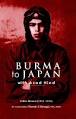
Book Review: Burma to Japan with Azad Hind – A War Memoir (1941-1945) by Air Commodore Ramesh S. Benegal, MVC, AVSM

Most of the books we read on World War 2 are from the Western perspective, usually British, American, or Australian. I’ve always been fascinated by this dark period in human history. I haven’t read many books (fiction or memoir) from the Indian perspective, what it was like to fight in this foreign war. Of course, it is a well-documented fact that Indian forces helped liberate Italy from Nazi control and that countless Indian troops fought with great courage in this war.

Before I go any further, here’s a small history lesson for those of you who are not conversant with India’s part in the war. 

For a start, India was dragged into this ‘European’ war as it was then part of the British Raj. Despite the ongoing freedom struggle, Mahatma Gandhi called upon Indians to support Britain in their war effort. But another national leader, Subhash Chandra Bose, or Netaji as he is more popularly known, decided that a quicker way to get freedom from the British was to join the Axis powers. So charismatic was he that many of the Indians living in South-East Asia, as well as some captured Indian POWs, decided to join the Azad Hind Fauj or the Indian National Army (INA) and joined hands with the Japanese to fight the British. 

Enough of the history lesson. ‘From Burma to Japan: with Azad Hind– A War Memoir (1941-1945)’ by Air Commodore Ramesh S. Benegal—gives a fascinating account of what it was like being a part of the Imperial Japanese Air Force as a trainee pilot from the Indian perspective. 

Ramesh Benegal was just a 16-year-old boy living in Burma when Japan attacked Pearl Harbor. His memoir details all the events, from the Japanese attack on Pearl Harbor until their Emperor signed the Treaty of Surrender. Written in an engaging and conversational style, he begins with this dramatic event:

It all started on 7 December 1941, when Japan unleashed its surprise attack on a place called Pearl Harbor. It was a lovely name, but I’d not heard it before.

The memoir goes on to detail the many (mis)adventures of Ramesh and his brothers and their uncle (their mother, fortunately, caught the last flight home) in their doomed attempt to reach India. The Japanese very quickly overtook Burma.  There are harrowing descriptions of the devastated towns and villages where not a soul was seen. 

However, Benegal goes on to say that the Japanese were not ill-disposed to Indians, but only to the British and other westerners. The boys (and men) hid in an abandoned house, but realized the Imperial Japanese army had overtaken the village. Cdre Benegal’s first description of a Japanese soldier is memorable:

A khaki coat, khaki trousers with legs bound in puttees, black rubber shoes with an odd toe-split, a jockey cap with a star sewn in front, rifle held at the ready. Short and stocky, Mongolian [Sic] features with narrow-set eyes. I did not know at that time that in the next four years, I would not only meet thousands of Japanese soldiers like these, but actually live with them, dress like them, and be trained by them!

Well, this is what happens in the remarkable life he describes. He, along with some other Indian boys, (by special permission of Netaji) was sent for training to a Japanese military school, and then they had a choice: either join the Imperial Japanese Army Academy or the Imperial Japanese Air Force Officers Academy. Benegal voted for the latter, as his heart was set on becoming a pilot. After passing a rigorous test, of the 22 cadets, only ten were selected, the author being one of them.

Now, most of the WW2 books I’ve read or the movies I’ve seen have presented the Japanese as being cruel and barbaric, but Benegal says they were ( with some exceptions) refined, cultured, and gentle. Of course, the disciplining method was different – if a junior ‘forgot’ to salute a senior, the punishment was immediate, usually hard slaps across the face! 

The memoir goes on to describe the defeat of Japan by the better-armed Americans, and what happened to this group of Indian airmen who suddenly found themselves on the wrong side. But by the end of the war, although the British branded them as ‘traitors’, they received a hero’s welcome back home and were called freedom fighters. India was still under the British when Benegal and his friends reached home, but they could not be touched as the current of public opinion favored them.  The author (who was barely 20) and his friends were put into solitary confinement but were fortunately let out by an understanding police commander.

Here are some of the interesting bits that I picked up from the book:

  1. The Kempai Tai – the Japanese secret police-cum-intelligence organization – put a stop to all the looting in the towns and villages they captured. The author has only good things to say about them, as they not only kept the law and order in the occupied territories but also discipline in their own army.
  2. There is a funny incident of two Japanese soldiers who entered an Udipi (South Indian vegetarian) restaurant and began feasting on the idli-dosa-sambhar. The proprietor spoke about them in Tamil in derogatary terms, and to his surprise, the officer got up and castigated him in fluent Tamil! 
  3. The Japanese food they ate – especially the ‘stinky’ radish pickles – they ultimately grew to love. 
  4. Most exciting (for the reader and the author) were the visits of Subhash Chandra Bose, who he met personally on more than one occasion. The charisma of this leader was astonishing. Here’s a description in the author’s words:

He carried himself with head held high and reflecting a glowing intensity, and the one – possibly the only –goal in life, freedom for India from alien rule. When he spoke, we could not help but listen to him attentively and each sentence that he spoke was forceful, and one instinctively knew that it came from the heart.

  • There is a touching description of the British soldiers working on the ‘Death Railway’ when Benegal and the cadets were on their way to Japan (by rail). ‘During this time, we saw the plight of the British POWS. I could not recognize them as Englishmen. Their bodies and faces were dark tan. They were stripped to the waist, wore torn and dirty khaki shorts, and a few of them were merely skin and bone….When the train halted,a few of them would come up to us and begged for food. We had nothing to give them…Once, one of them asked for a cigarette…Anyone who managed to grab a packet of cigarettes was like a child getting a valuable present from Santa Claus…
  • The author describes how he and his friends captured a pig but had no idea how to slaughter it. They finally handed it over to the Japanese. The Japanese officer slaughtered it with a samurai sword. For some time, they feasted on roast pork and wild rice. (OK, this is not for the squeamish, but heck, this is war, and these guys were starving. BTW, the author until the age of 16 had grown up vegetarian, but the war taught him to eat what he was given or what was available).
  • Cdre Benegal describes in detail the landing of the Americans after Japan signed the treaty of surrender. They expected the Japanese public to take revenge on them (for the bombings on Hiroshima and Nagasaki) but instead, they ‘could not believe that the polite, disciplined and friendly people were the same stock as the brutal, hard-fighting frontline soldiers…’
  • After the Americans landed, a representative from Benegal’s side met the American authorities, who did not know what to do with them. It seems one of the American officers joked that they had nothing against them and they too had fought the British for their independence. They supplied the author and his friends with rations.
  • After four years of deprivation and starvation, Benegal describes the abundance of food they received from the Americans. The packs they received ‘were a regular Christmas hamper as far as we were concerned. It contained cocoa, tea, coffee, biscuits, cakes, meat-loaves, corned beef, soup, chocolates and many other things.‘ 
  • Of course, all this came to a stop when a British officer took charge and termed them traitors. The group politely but firmly told the officer that they were not traitors and never owed allegiance to the British, and were very proud to have served in the INA. This infuriated him, and then began their nightmare journey back home in conditions that were subhuman even for animals. 
  • This was the first time that Ramesh Benegal had actually set foot in India, having grown up in Burma. In 1950, he joined the Indian Air Force and had a distinguished career, receiving the highest gallantry awards from the Indian government. 

Well, this is admittedly a bit of a long review of a truly memorable book. I’m not sure why it has not received more publicity. I recommend this book very highly to all those interested in a new perspective on the Second World War. It is immensely readable. 

Be careful of the company you keep during COVID times

This article appeared in Gulf News on 18/7/2020)

The ‘friend’ rang me up for a chit-chat. We used to meet socially, and although she was not among my closest pals, she was part of the group of who I was a member, and we’d meet occasionally.

Like others living in Dubai, I too have a ‘social milieu’, a group of friends who I hang out with and meet for coffee or for dinner once in a way. Good company, but, barring a few, not people to whom you could open your heart.

Usually, this friend and I exchanged forwarded jokes on WhatsApp, and ‘liked’ each other’s’ pictures and messages on FB. It was rare that we actually talked to each other on the phone, but given the exceptional times we’re living in, and the extra hours we all tend to have, it seemed natural for her to call.

After the usual pleasantries, she started off: of how terrible things were in the world, of how the vaccine would take a couple of years to find, of how we can’t go out, can’t travel, etc, etc.

When I gently reminded her that things were not so bad, and 80 per cent of the people who caught the virus showed mild symptoms, and only 5 per cent developed death-threatening ones, she somehow convinced me that I was among that 5 per cent.

After a harrowing half-hour, I put the phone down, much worse for the call, a jiggling jelly of fear and negativity.

Have such a friend? I’m sure you do. These are the prophets of doom and gloom, the ones who can never see the positive in any situation. They are ubiquitous, such people.

They may be among your friends, they may be in your WhatsApp groups, or they may even be a close relative! Woe betide the individual with a spouse who’s the harbinger of bad tidings, and who seems to relish giving bad news. There’s no way to avoid such a person too, living under the same roof.The best you can do is to inject some positivity into their doomsday prophecies, or else, just turn a deaf ear.

The question is, why do people do this? I think the answer lies in wanting to project. In psychological terms, “projection refers to unconsciously taking unwanted emotions or traits you don’t like about yourself and attributing them to someone else.” (Karen R. Koenig)

Projecting your fears and insecurities on another individual seems to lighten your burden. But hey, buddy, spare me! Find someone else to vent all your fears and frustration.

In contrast, there are some friends who make you happy and cheerful. They are not blasé about the seriousness of the present situation, nor do they underplay it. But they don’t keep harping on the number of dead, the high rate of infection, and the state of the world’s plummeting economy. Keep such friends close.

They talk about other things too, of books they’ve read and music they listen to, even some juicy gossip to brighten your day. Conversation is light and fresh, not deep and heavy.

A friend of mine on Twitter, who is an excellent photographer, always puts up pictures of the sun rising over an urban landscape, or flowers in bloom, or birds flitting around, usually with a happy caption. Such photos lift the heart and spirit. Needless to say, talking to her is also a pleasant interlude in an otherwise dull day.

These are, indeed, stressful times, but, as the old saying goes, ‘what can’t be cured must be endured.’ But at least learn to choose your friends wisely, the chirpy, happy ones, and keep the doomsayers and naysayers at bay.

Soon, this will all be over and we’ll look back on these times as either a blip or a learning curve in our lives. Keep smiling!

— Padmini B. Sankar is a Dubai-based freelance writer and author of the forthcoming book, “The Mother of all Parties”. Twitter: @paddersatdubai

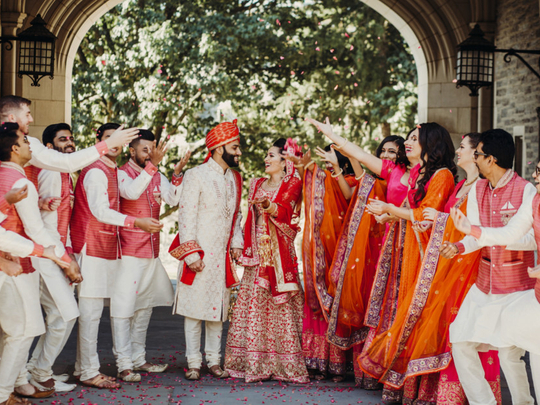
Is the big fat wedding a thing of the past?

1.2179400-2551619189
Are we obsessed with the big fat wedding?Image Credit: Getty Images

This is an article of mine that was recently published in Gulf News. Hope you enjoy it. Let me know your thoughts.

Were you planning to get married this year? Or have you paid up for your son or daughter’s big fat destination wedding with all the bells and whistles?

Chances are that the wedding has either been cancelled, rescheduled or downsized, with something big planned for ‘when this is all over.’

All around the world, we hear the same story, of wedding vows postponed or extravagant weddings downsized. Simplicity is now the name of the game.Instead of an exuberant wedding, many cut to the chase and have a virtual wedding, with guests attending from round the world to shower their love and blessings, all on the small screen.

Along with the couple, so many others have been hit by this tidal wave, the entire flotsam and jetsam — wedding planners and providers, the dressmakers and caterers and florists and what-have-you.Even the band and trumpet players, beauticians and henna-painters. Suddenly, an entire industry has been disbanded overnight.

Perhaps, along with all the other long-lasting changes that this virus brings in its wake is the big fat wedding itself. There are weddings, and there are weddings.

Simplicity is the name of the game

The simple act of two people exchanging vows and promising to spend their lives together for better or for worse, has in recent years been transformed into a mass entertainment with all stops pulled out.That applies to both the well-heeled and the hoi polloi. Very rarely do you hear of a couple having a simple, quiet marriage with just family and close friends in attendance.

What naysayers had always warned about, to tone down the extravagance, has now been achieved almost overnight by a tiny, microscopic virus. Around the world, guest numbers have been drastically reduced.

Just as people are finally getting used to WFH, so too they’ll have a rethink about who to invite for their big day. The virus has made weddings a numbers game — limiting the number of guests.

Among all the jokes on corona going the rounds, the latest one is a video where some radio jockeys make a prank call pretending to be wedding event managers. It goes something like this:

‘Am I speaking to X?”

“Yes, I am X.”

‘We’re the event managers for your friend, Y’s wedding. We just want to inform you that your RAC is 55.1 per cent, and your wife’s 56.2 per cent.”

X is rightly confused, and asks what all this means. The prankster goes on to explain that RAC stands for Reservation Against Cancellation, and cheekily informs: ‘Now, if anyone cancels, your number will go up, and you may be one of the lucky 50 who can attend the wedding.’

X is naturally furious, and claims a friendship that goes back over two decades. The prankster goes on to say that if he pays a thousand rupees per family member, he’ll move his name up.

Heated words

Some heated words are spoken, where the guest states he won’t be attending the wedding and will save money on the gift, and is about to cut the line when the RJ reveals his identity and says it is just a prank.

Well, as the saying goes, there’s a grain of truth in every joke. The takeaway from all this is, try to maintain good relations with your friends and relatives or else you may not make it into the wedding list!

But is that big fat wedding, with all its razzle and dazzle, a thing of the past? Will we be telling future generations of those weddings of the glorious past, with thousands in attendance, the heaps of food, the entertainment, and the number of diamonds and emeralds sown on to the bride’s dress?

I sincerely hope not. I’m waiting to attend the next flashy wedding (if I’m lucky enough to be invited) or at least read about one in the papers. Long live glitzy weddings!

— Padmini B. Sankar is a Dubai-based freelance writer. Twitter: @paddersatdubai

Humour is the name of the game

stock-vector-pop-art-style-comics-panel-mouth-of-man-laughing-out-loud-comedy-lol-vector-illustration-1077695468

Yes, these are indeed hard times. No matter what we say, how we pretend that everything is OK, it just isn’t. We’re lucky, we console ourselves. We have food on the table, an air-conditioned home to keep away the summer heat, Netflix to watch, Zoom and GoogleMeet to chat with our family and friends…But hey, it’s just not the same!

When will we get back our beautiful, familiar world? When can we meet our friends without fear? When can we go to a barber shop or a beauty salon without covering ourselves like someone from outer space? When? When? When?

It is during these trying times that our books give us extra solace. Lockdown and WFH gives us time aplenty to read. Depending on our mood or our tastes, we may pick up light books with just a flimsy story-plot, or dark and serious books that make us think. 

But I need a bit of both — something light, but which also yields nuggets of wisdom. Not too light, but nothing that drags me down too. And most importantly, a book with a positive message, a cheesecake of a book. For this, Rachel Joyce is my go-to author.

                                                5309857

                                                            Rachel Joyce

So far, I’ve read three of her books: the iconic The Unlikely Pilgrimage of Harold Fry, followed by The Music Shop and then Perfect. I love her quirky characters, I love the Englishness of her books, and, most important, I love the positive vibes at the end of the tale.

I think reading humour helps in these depressive times. I honestly can’t think of anyone funnier than PG Wodehouse. He’s old-fashioned, yes, even archaic. I’m not sure if younger readers have even heard of him. But can you name any present-day writer who writes pure comedy like he does? Of course, there are plenty of brilliant authors who write comedy, but their comedy is also interlaced with darker elements; it may be a sci-fi with comic elements (like David Wong’s This Book is Full of Spiders),or even crime with humour, like the Baby Ganesh Agency books by Vaseem Khan. Or of course, Alexander McCall Smith.

Unknown

                                                        The inimitable PG Wodehouse

I love Amor Towles for his wry humor. (A Gentleman in Moscow is excruciatingly funny in places, but framed within a rather dark period in history). But I can’t think of anyone with the laugh-out-loud kind of humour of PG Wodehouse. If you can, do tell me, and I’ll make it a point to read him or her.

Well, on this note, I am signing off. And, although I am not putting myself on the same pedestal as these famous writers, can I give you a gentle reminder that my book, The Mother of all Parties, is also a comic romp through the incredible lives of Dubai’s nouveau riche. It’s available on all the Amazon platforms from July 10th,  (and as a hard copy too on Amazon.in) and I’d be honoured if you read it.

Until then, take time to laugh…

Padmini


The mother of all parties by [Padmini Sankar]


The mother of all parties Kindle Edition


Language: English  

Keeping sane in these mad times

The Big C. undefined

Know what I’m talking about? Of course you do. It’s the Coronavirus, or, to use its shorter and sharper name, COVID-19. (Actually, the magnified image of it looks quite pretty, but it’s the deadliest thing going.)

Don’t ask me why it’s number 19. I’m sick and tired of all the scientific and non-scientific jargon, the half-assed cures suggested to keep the virus at bay ( chew four or fourteen cloves of garlic, take this or that homeopathic medicine, boil pomegranate skin in two glasses of water and drink the extract…). No one seems to be talking about anything else, and I’m sure you too are SICK AND TIRED of the whole darned thing!

No, this is not to trivialise the virus (better to err on the side of caution, better to be panicky and well-prepared, as this runt is little-known and mighty dangerous). But no one seems to be talking about anything else. Programs and shows have been cancelled. We’re even afraid of going to any large gatherings, and (bless me!), even spending time in a mall! Isn’t mall-crawling the last resort of the completely and utterly bored of the human species?

After being locked in for almost a week, I’d had enough! I told the better half that I’d go crazy if I didn’t see Sheikh Zayed road, didn’t whizz down it, didn’t have a bite of something that isn’t home-cooked. (You see how good I’ve been).

So that’s just what we did- virus be damned – zipped down SZR, and picked up a thaali at my favorite hole-in-the-corner restaurant.

There’s only so much you can do, so much you can restrain from, before you go mad.

What did you do, and how is Mr Vicious Virus treating you? Let me know….