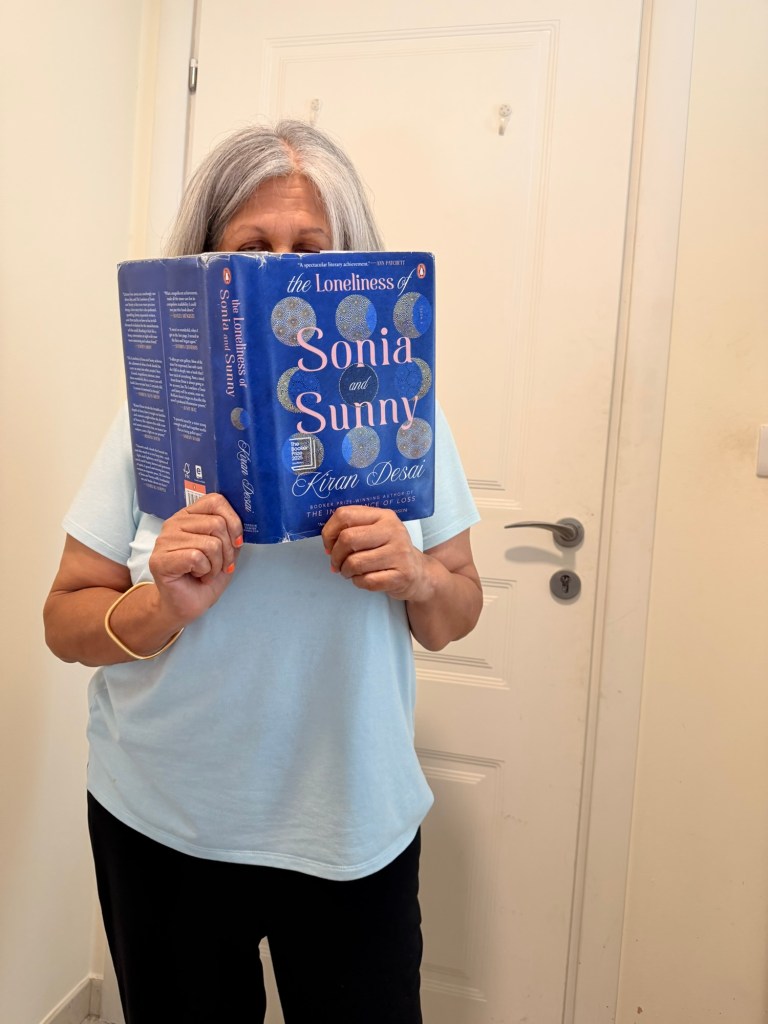
Shortlisted for the 2025 Booker, this book has received a lot of praise as well as a lot of flak. There are two main criticisms of it.
It’s too long. (650 odd pages in my edtion)
It mocks Indians and their lifestyles. And this coming from an Indian American is especially vicious.
Now, I do believe point no. 1 has some weight. The novel sags somewhat in the late middle, and could definitely do with some pruning.
Point no. 2 is not true at all. The novel gives a realistic portrait of the deracinated Indian who feels neither at home in India or in the US ( where a large proportion of the educated Indian immigrants have made their home). If the book appears to criticize Indians, it is equally critical of North America.
In my opinion, TLOSAS is a brilliant book that addresses the modern malaise of disconnect, and it does it beautifully, artistically and truthfully.
At its heart, this book is a love story about two young people, Sonia and Sunny, who know in their hearts they should be together but are separated by their own stubbornness and misunderstandings as well as by societal and family pressures. It’s a book that will stay with you as it speaks to your heart about basic human needs, of love and loneliness and the immigrant experience. What I especially love about this book are the different motifs used in it to tie it together- the kababs, the ocean, a ghost dog, and especially the mystical talisman of Badal Baba that plays such a prominent part in this novel. This touch of magical realism gives the story a new depth.
I am tired of reading clever, stylistic books that try to be different. The appeal of this book is that it is a good, old fashioned read, a Bildungsroman, a story in which you can get immersed, with an ending that is realistic, satisfying and complete.
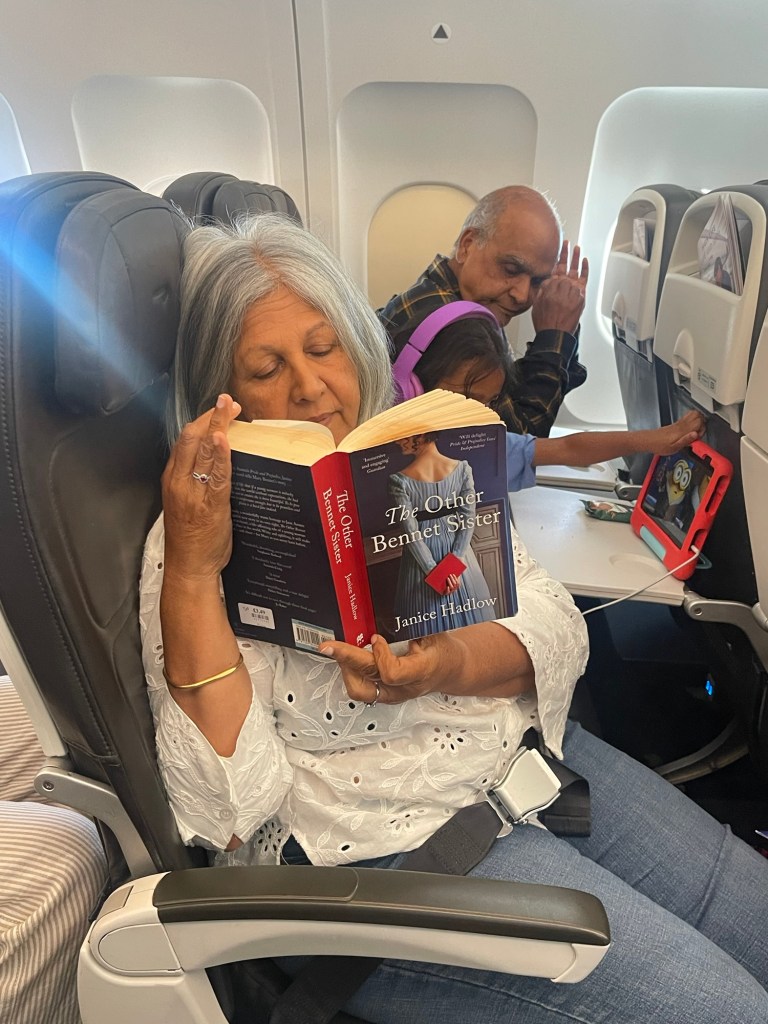
Me reading The Other Bennet Sister while traveling
The Other Bennet Sister by Janice Hadlow
Remember Mary Bennet, the moralizing middle sister in Jane Austen’s Pride and Prejudice? Honestly, I felt it was a little mean-spirited of JA to present her so unsympathetically. Dull, pompous, and lacking in social graces, she is the perfect foil for her more brilliant and colorful siblings.
However, come to think of it, Mary is a character who’d appeal to modern readers for the sheer fact that she doesn’t fit in. Janice Hadlow’s novel is based on her character as well as the other characters who appear in P and P, but we see her not as a caricature but as a real flesh-n-blood woman with feelings and desires, who gradually overcomes her own weaknesses to emerge a strong and likable individual. She’s presented as a character who’s slightly out of touch with reality and lacks self-esteem and confidence, as well as an inability to voice her real feelings. Janice Hadlow tackles her subject with sympathy, humour and elan.
I recommend this book on many counts. For a start, it uses some of the same minor characters who appear in P and P but makes them appear more human. For eg, the ridiculous Mr Collins is treated sympathetically, although Charlotte and Mrs Bennet are shown to be not very different from the original. But what I enjoyed the most was the development of Mary’s character whose changes are very slow; nothing is done in a hurry. Some readers may find the book dragged a bit but I enjoyed the slow burn. This is why, by the end of the book, we accept the new Mary who is actually far more to our liking than former favourites Elizabeth and Jane. Their struggles are trivial and shallow compared to Mary’s struggles.
Another aspect of the book that appealed to me was the language and style. It is so close to JA’s own ( in fact, some of the sentences are lifted straight from the original) that you’d think this is one of the author’s own lost works. I absolutely loved the wit and humour that is so reminiscent of JA’s.
Of all Jane Austen’s novels, Pride and Prejudice happens to be my favourite. There are many spin-offs of this novel both in books as well as movies. But until now, no one bothered about poor Mary Bennet. But she comes into her own in this novel. Remember Lydia, the scandalous younger sister who elopes with the cad Wickham? Perhaps now someone can present Lydia also in a new light.
If you love P and P or Jane Austen, this book is for you!
Chat symbol above vintage old book on blackboard background
So, your book is published. Your friends and family have dutifully bought it, read it and praised it.
Now, you ask them to write a review. A review? You can see the look of bafflement or confusion or just sheer annoyance on their faces. Wasn’t it enough that they bought your book and even read it? ( Dear writer, just be aware that many of your friends will buy your book to please you, but never get down to reading it)
No, dear reader, it is not.
Writers ask for reviews for one simple reason. Reviews sell books. It makes them better known. And the more the reviews, the better the sales. Reviews are in fact the life-blood of any writer.
A BOOK WITH 500 OR 5000 5-STAR REVIEWS, AND NO BAD REVIEWS IN SIGHT, ESPECIALLY BY A NEW OR UNKNOWN AUTHOR, MAY BE A SCAM; Ever picked up a book with five hundred five-star reviews, not even a four star review in sight leave alone three or two? And you find it meh? Well, dear reader, you’ve been scammed. This writer has probably bought reviews. Yes, you can do that. Pay x amount of money to get 50 or 100 or 500 5 star reviews. That’s the promise. It’s a temptation for every writer because it plays with the algorithm. Now, I am not mathematically or statistically inclined, but it seems these Amazon algorithms are an indication of the book’s popularity. But ask yourself, do readers even look at the statistics? And there’s another thing – being no. 1 on Amazon in a niche category like Predicting the Future through your Nostrils doesn’t mean a thing, except for giving the writer bragging rights. DISCLAIMER: This is not to say every debut with excellent reviews is necessarily a scam, but you do see the odd one here and there.
DON’T BUY REVIEWS: Now, I always wonder at the kind of writer who buys reviews. Don’t they have any confidence in their ability? Surely a few negative reviews shouldn’t make a big difference. And surely a reader is entitled to his or her opinion. Some may like it, some may not. Deal with it. But to actually buy reviews to boost yourself and your sales? Such things are short lived. Sooner or later you’ll be caught. And the repercussions are many — especially for future books.
WRITERS, CHOOSE NFLUENCERS AND BOOK BLOGGERS CAREFULLY:Coming to another point: Dear writer, you’ve sweated so much over your book, and all you friends and family have written their reviews. What’s next? Catch hold of influencers and book bloggers. Be careful who you select. they should be people who read in your genre or people who enjoy reading. And who write honest reviews. You don’t have to pay them. All you have to do is send your book along. And once that review is out, probably as a blog post or insta post, just hope that some of their followers buy your book. It doesn’t always work, but this is the next best thing you can do.
MANY ARE NERVOUS ABOUT WRITING REVIEWS, OR DON’T KNOW HOW TO:Talking again of reviews, perhaps many of your friends and family don’t have a clue about how to write a review .in that case, guide them. Tell them to write down what they liked about the book and what they didn’t like. Ask them to give you stars- if it’s very good, four or five stars. Explain that three Stars is average or below average. And surely your book does not merit just one or two stars, so don’t go there.
JUST KEEP AT IT! Now, every writer may get disillusioned by the entire review business. People may be reading your book but are too lazy or busy to write a review. Well, it’s something you have to live with. Only very famous writers get reviews in their thousands. And until you reach that exalted position, be humble, be realistic. But do everything in your power to promote your book, make it known without irritating people. And just hope those reviews keep coming!
The Italian Connection – books written by Italians or about Italy
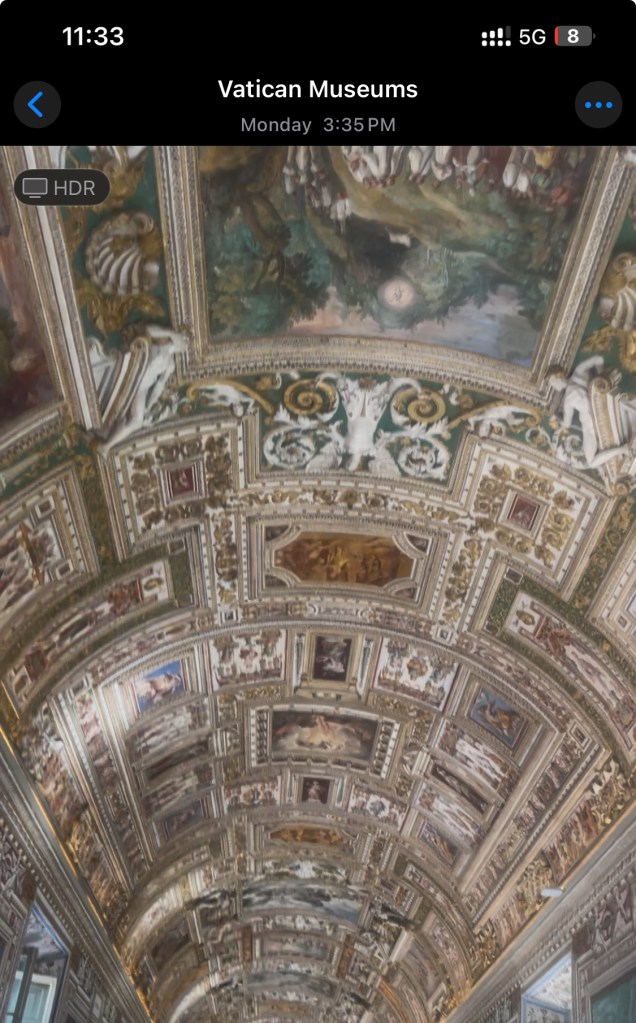
A visit to the Sistine chapel, the roof of which was painted by Michelangelo in the 16th century — took me back to books either written by Italians or set in Italy.
Italy is the stuff of literature and romance, of intrigue and murders. So here is a round-up of all the books I’ve read that have an Italian connection.
The Agony and the Ecstasy (1960) by Irving Stone. This author was all the rage when I was growing up, and his novel about Michelangelo started off my love affair with Italy.
The Name of the Rose by Umberto Eco. (1980)This book too is about church intrigue and has got a lot of flak for being pretentious and pseudo. But I remember being hooked by it.
My Brilliant Friend by Elena Ferrante. (2012) – a novel about female friendship and part of the Neapolitan series. Excellent.
The Da Vinci Code by Dan Brown. (2003) Now, I may be trolled by some for putting this author with some of the greats above. He’s been criticized for his clunky prose and historical inaccuracies . But his book’s become a massive worldwide bestseller, and makes me ponder whether readers are really concerned about the ‘writerly qualities’ of a novel.
Jhumpa Lahiri- ‘Whereabouts’ (2018) This author moved to Italy in 2012 and began writing in Italian. ‘Whereabouts’, originally written in Italian, is her first self-translated work. I loved it for its spare yet poetic style and how it goes deep into the unnamed narrator’s thinking process. Btw, Lahiri happens to be one of my fave writers.
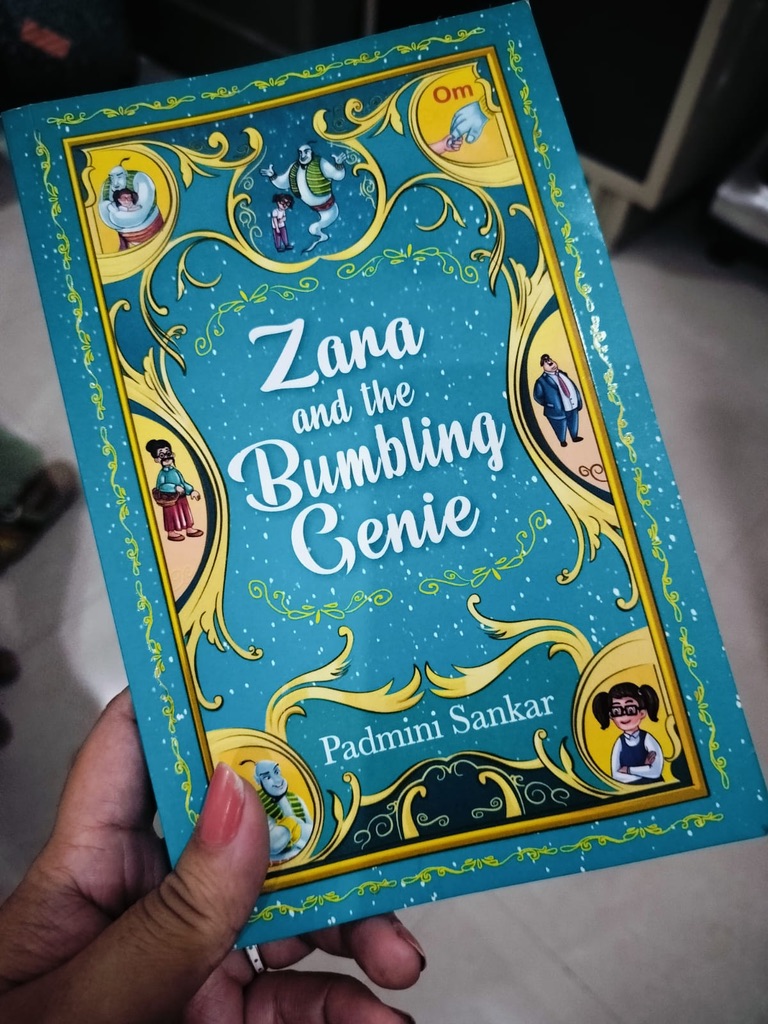
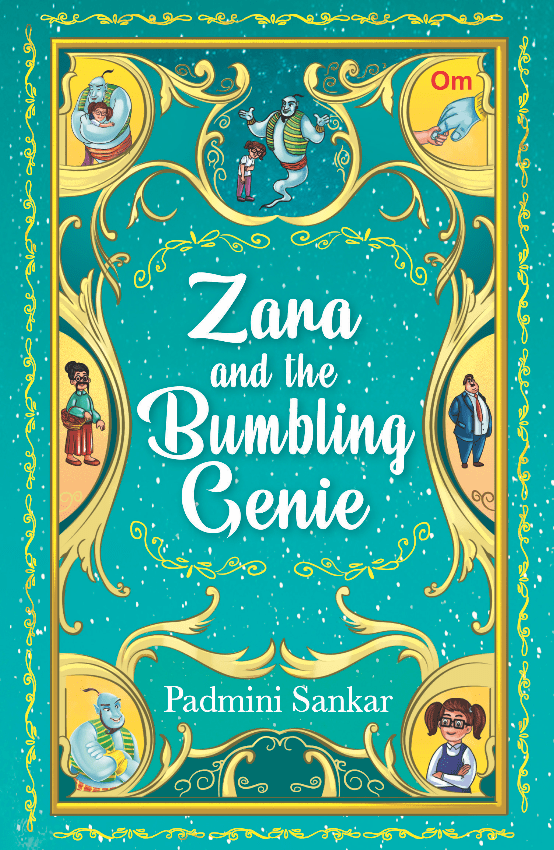
As you can see, Italy is the stuff of romance and intrigue. One of the characters in my recently published middle grade novel, Zara and the Bumbling Genie, has one Italian name. Can you tell me who it is? https://shorturl.at/9VgHF
What are some of the Italian authors you’ve read? I’d love to know in your comments.
Am I fated this year to read heavy tomes of over 700 or 800 pages? It appears so!
This book, 1Q84 parts 1 and 2 by Haruki Murakami is 805 pages long ( in my edition), in small print. . I haven’t yet picked up the third part. It took me an entire month and more to read, but let me tell you, this is one writer who takes you by your throat and makes you turn the pages. It’s riveting, robust, relentless.
At its heart is a love story- between the main characters Aomame and Tengo. But there’s more to it- a sinister cult, some crazy, unforgettable characters ( the editor, the insurance collector) and a big chunk of magic as well as sex thrown into the mixture.
I’ve never read anything like this before, and it’s hard to classify this book. Is it dystopian fiction, magical realism, literary fiction, or all three? But the voice is captivating and makes you read on and on. I’m hooked onto Murakami and look forward to Part 3 of 1Q84. And of course, his other books.
If you want to be challenged and move out of your comfort zone, pick this book.
Something that I’d missed as a debut author was my book launch. My debut was published in 2020, at the start of Covid, so public gatherings were out of the question.
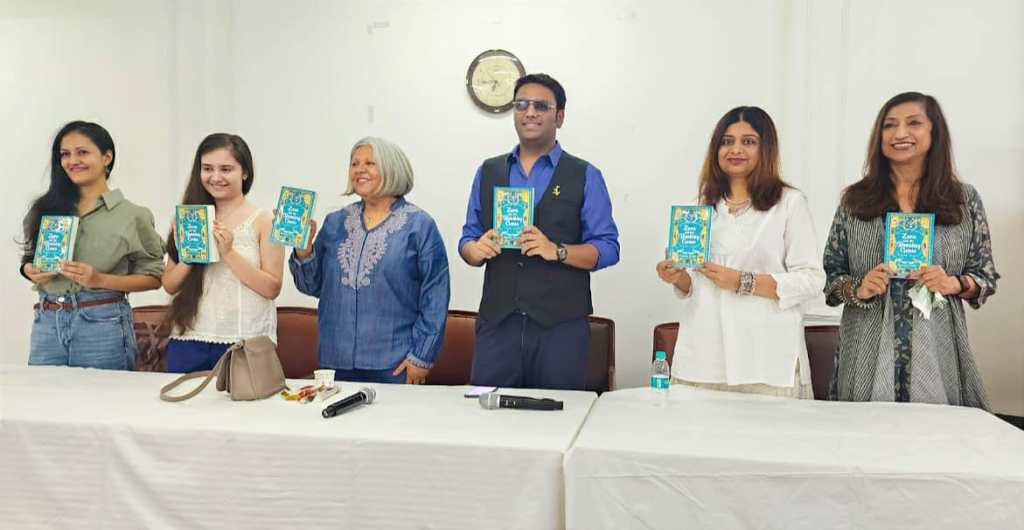
This time, though, it was different. My middle-grade fantasy, Zara and the Bumbling Genie, published by Om Books International, was released in March 2025. It was time to celebrate. I was going to go all out – have a launch as well as book signings.
What happens in a launch? Well, you invite family and friends as well as those in the publishing world who have helped you with your book.And you tell them about your book. Let me warn you, they are expensive affairs, but do help to create a buzz around your book. My launch was held in the beautiful Vasant Vihar Club in New Delhi, and my agent, Suhail Mathur, was nice enough to arrange everything for me, from the panelists to the snacks served to the gifts and even to the invitation itself.
Launch in New Delh
IMO, you hold a launch not just to celebrate your achievement and talk about your book and your writing process, but also meet the people who matter to you the most, your family and friends. And to also thank those who are behind your book’s success. Of course, if you sell some of your books, that’s an added bonus. But it’s not essentially a ‘marketplace’ for your book. But it does help in creating some buzz around it, and if you’re lucky, some media attention. I was lucky, as one of the gentlemen who attended the launch asked me if I could be featured in his newsletter that has a subscription of 4000 people. To this I readily agreed. I mean, who doesn’t want media attention?
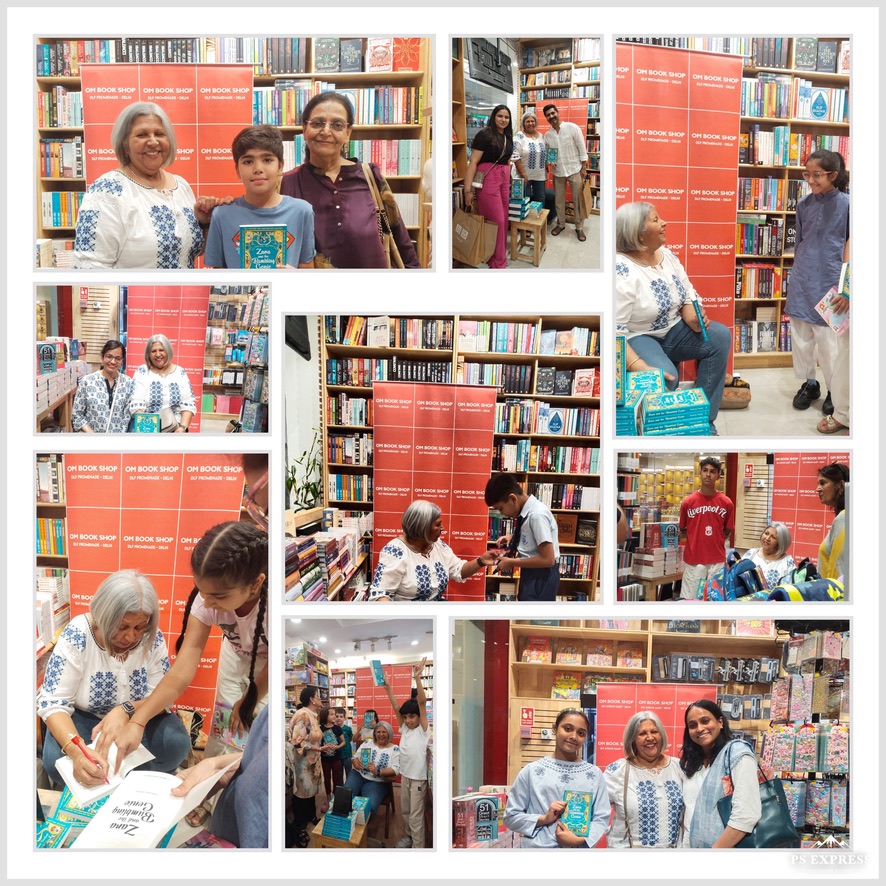
Book signing at Om Bookstore, New delhi
Book signings are a different cup of tea altogether. The publisher takes the responsibility of arranging your signings. I managed to do book signings in three cities, Delhi, Bengaluru and Chennai. ( Hold on, Dubai. Your turn will come soon.)
The best part of a book signing is the interesting people you meet, many of them your potential readers. When a visitor to a bookstore sees an author, they naturally gravitate towards him or her. You have to be prepared to answer all kinds of questions, especially from kids ( I was stumped with this one- what was the inspiration behind your book? Honestly, the answer was so complicated). I was a little nervous too whether I had to convince people to buy my book. as I was wondering what this entailed. I’m a writer, not a marketeer, ( and I use this term with the utmost respect: hats off to those in sales who do a very difficult job of convincing people to buy a product).
However, I didn’t have to convince anyone to buy my book. Those who bought it were genuinely interested in reading it themselves or giving it to their kids. And I must say I thoroughly enjoyed talking to my readers, learning a bit about them, and of course, telling them a bit about myself. And let me add why I think book signings are such a hit. Most people WANT to meet authors. Especially kids. So it’s a win-win situation for both.
My advice to writers: a launch is not strictly necessary, but book signings are fun to do and don’t cost you an arm and a leg. So, if you’ve recently released a book, my advice is to arrange as many book signings as possible. Not with the agenda of selling, but more to meet people. And of course, it definitely helps in creating interest in your book.
In Zara and the Bumbling Genie, Padmini Sankar conjures a story that is as magical as it is moving, skillfully weaving together elements of fantasy and deep emotional truths. This is not just a children’s tale; it’s a luminous narrative that speaks to readers of all ages about resilience, compassion, and the true meaning of friendship.
At the heart of the story is Zara, a bright and courageous young girl facing the devastating challenge of losing her sight. But Zara’s world doesn’t shrink into darkness—rather, it expands with imagination and wonder when she encounters a genie unlike any other. Far from the omnipotent beings of legend, this genie is charmingly clumsy and endearingly human in his shortcomings. His magic doesn’t always work as intended, and his past is clouded with a mystery of lost powers and forgotten purposes.
Together, Zara and the genie embark on a quest that is as much internal as it is outwardly adventurous. The journey they undertake is laced with humor, danger, and tender moments of growth. Zara’s struggle with her impending blindness is portrayed with honesty and sensitivity, never descending into self-pity. Instead, her spirit of hope and determination becomes the guiding light of the story.
Sankar’s writing shines with a rare blend of simplicity and emotional depth. She captures the inner world of a child with authenticity and layers the fantasy with just enough realism to make the reader believe that genies and magic carpets might truly exist—if only we’re willing to see them with the heart.
What makes this story stand out is its unwavering focus on empathy and loyalty. The friendship between Zara and the genie is touching, built on mutual trust and the willingness to accept each other’s flaws. The genie’s arc—from a bumbling misfit to a being of renewed purpose—is subtly told, paralleling Zara’s own transformation from vulnerability to empowered agency.
The book also subtly addresses themes of disability and acceptance in a way that is uplifting rather than didactic. It doesn’t preach, but it teaches: that strength is often found in unexpected places, and that the loss of one ability can open doors to others—imagination, perception, kindness.
Zara and the Bumbling Genie is a beautiful, heartwarming tale that reminds us that true magic lies not in grand spells, but in the strength of the human (and genie) spirit. It’s a tale that lingers, inspiring young readers to be brave, to believe in second chances, and to see the world—and each other—with wonder and love.
Hi everybody, I’m starting this new blog about every book I’m reading this year and my views on it . The first book of the year:
A Little Life by Hanya Yanagihara
I normally never read any book over 500 pages in length, and that’s stretching it. So I’d been avoiding A Little Life which goes up to 814 pages, but because my book club chose it as our next read— well, there you are.
The story is about four college friends and their lives for the next three or so decades, but the focus is mainly on two, Jude and Willem. Especially Jude, the main character, who’s been sexually abused as a child.
This book is not your typical novel and breaks quite a few rules. For one, there’s a lot of tell; two, there are no filters regarding some of the more sordid scenes, and three- it’s darned length! Novels have to be around 80-100,00 words long to keep the reader’s interest from flagging, we are told. But this one kept me hooked for all 814 pages and I stayed up until 5 am to finish it!
What was it about this novel that made it so gut- wrenchingly unputdownable? ( I hate using that word as it’s got such a commercial zing to it, but can’t think of any other). Well, here we go.
The subject matter of child sexual abuse was dealt with honestly. It’s horrifyiong, but it’s true. Such things do happen. The author’s use of the third person close POV enabled her to go right into the heart and soul of the character. Her writing was without any kind of judgement or sentimentality. And she was not afraid of writing about feelings and emotions. I think emotions are such a large part of our lives and many authors don’t want to appear sentimental and maudlin so merely skim over these issues. But not this author.
Published 10 years ago to critical acclaim, the book has valuable lessons for all of is. And it shows us life can be beautiful.
Have you seen the movie ‘American Fiction’? It’s one of the funniest and most biting movies I’ve ever seen. Here’s the story (with no spoilers)
Monk, a frustrated black novelist/professor is fed up at the way black people are portrayed in novels and books, and how they are stereotyped. Especially jarring is when a black writer called Sinatra Golden writes a book called ‘We’s Lives in da Ghetto’ which becomes a runaway bestseller. Her book buys into all the common stereotypes of black people — unwanted pregnancies, violence, broken homes, etc. Although Monk writes literary fiction, none of his books sell. When he complains to his agent about books like Sinatra Golden’s, the agent tells him a truism: ‘White people think they want the truth but they don’t — they want to feel absolved.’
Monk then writes a satirical book under a fictitious name: Pafology by Stegg R. Leigh. It’s what he terms pure trash, buying into all the stereotypes of black people. But when it’s picked up by a leading publisher, and he is promised an advance of 75000$, he is stunned.He wants to withdraw the book, but his agent forces him not to. And, when the publishers are told he’s actually a fugitive on the run and therefore can’t show his face, they are even more delighted, as they think this is ‘the real thing!’
When the publishers finally do speak to him, he insists on renaming the novel with a naughty four-letter word, to which they surprisingly agree. Monk bangs his head in frustration. He is trapped in the very trope he is criticizing, as the book continues to win more and more accolades.
This movie, imo, is especially relevant for readers and writers. It’s a biting satire on race and identity, and especially about how Black people are represented in popular culture.
For me, movies like ‘Slumdog Millionaire’ and some best-selling books on India that depict poverty and casteism are tired tropes. It’s not that poverty and casteism should be ignored or pushed under the carpet, but surely there’s more to India than these two issues.Especially poverty porn!
What are some stereotypes that make you get hot under the collar in movies or books? I’d love to hear about them.
I’m in London, with it’s crazy weather of sunshine and rain and cold and heat all in one day. Right now, it’s raining ( not drizzling) and I’m enjoying the pitter-patter on the window sill.
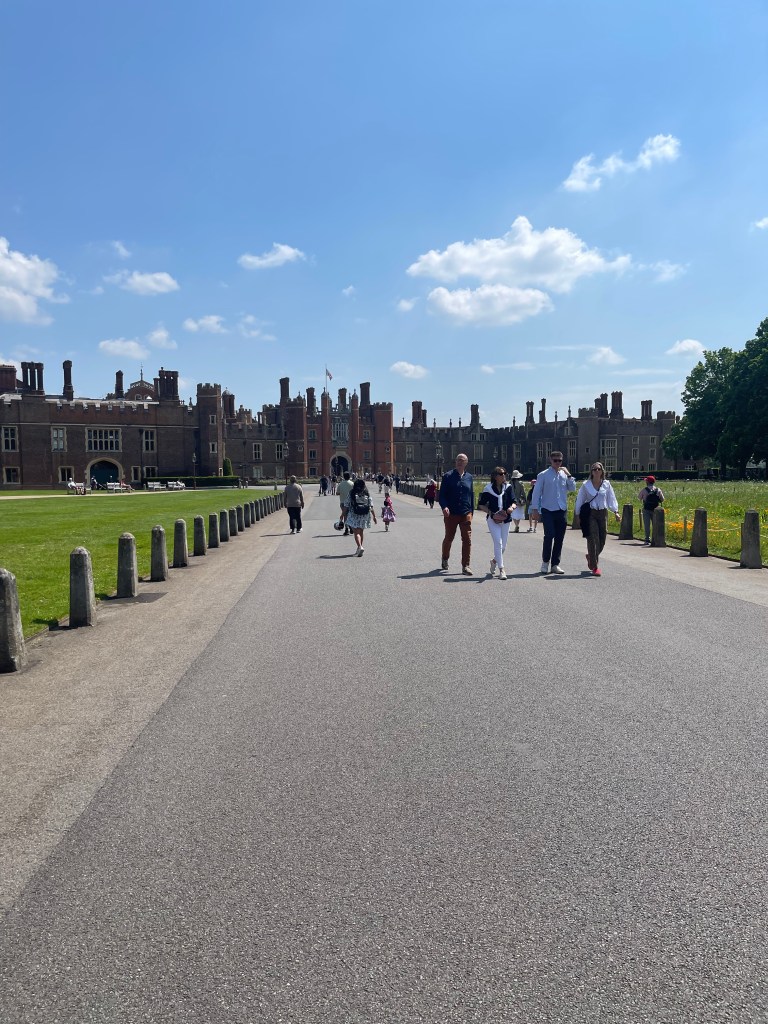
But the day before it was warm and sunny— in fact, almost hot, and that’s when we made a trip to Hampton Court Palace, which was one of the palaces of the colourful king, Henry V111 and his six wives. Despite having two little ones with us, we managed to do the grounds and some parts of the palace. (Below is a view of the palace. Truly awesome!)
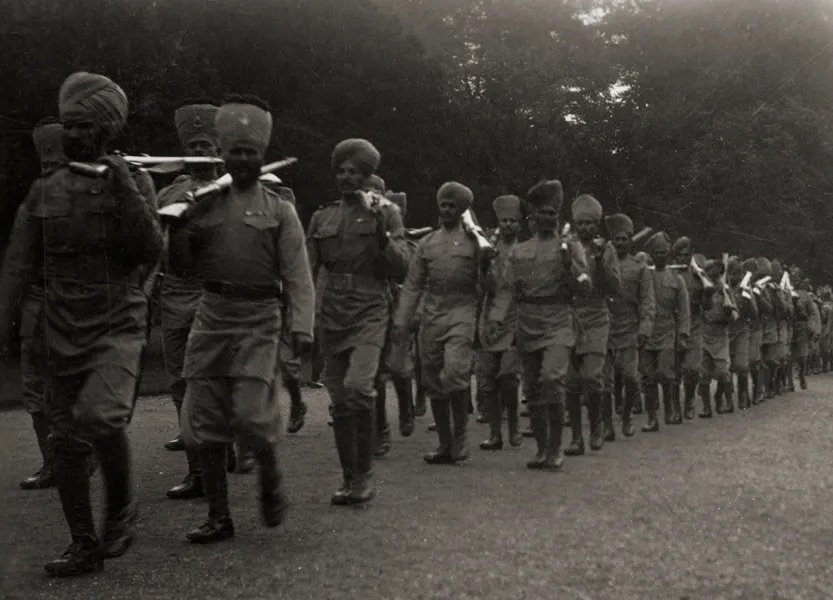
You’d never expect something so English, a Tudor palace, to have anything to do with India. But I was surprised to learn that a contingent of Indian troops actually camped on these palace grounds way back in 1919. They’d travelled all the way from Mumbai to take part in the Peace Celebrations post the First World War. The exhibition about them with photographs, videos, and their oral histories presented by their descendants was truly the highlight of this visit. (Below is a aphotograph taken from the site http://www.hrp.org.uk that shows the Indian troops who had arrived for the occasion)
Lest we forget- about 500,000 Indian soldiers fought this war alongside the British. King George the Vth had this to say:
I HEARTILY THANK ALL MY INDIAN SOLDIERS FOR THEIR LOYAL DEVOTION TO ME AND TO MY EMPIRE, AND FOR THEIR SUFFERINGS CHEERFULLY BORNE IN THE VARIOUS CAMPAIGNS IN WHICH THEY HAVE SERVED IN LANDS AND CLIMATES SO VERY DIFFERENT FROM THEIR OWN.
From King George V’s speech on August 2nd 1919
The part played by Indian soldiers in this war does not have a happy ending. The promise of freedom or at least some amount of self rule was never kept. It would take many more years of protests and violence and yet another war to ultimately win this freedom.
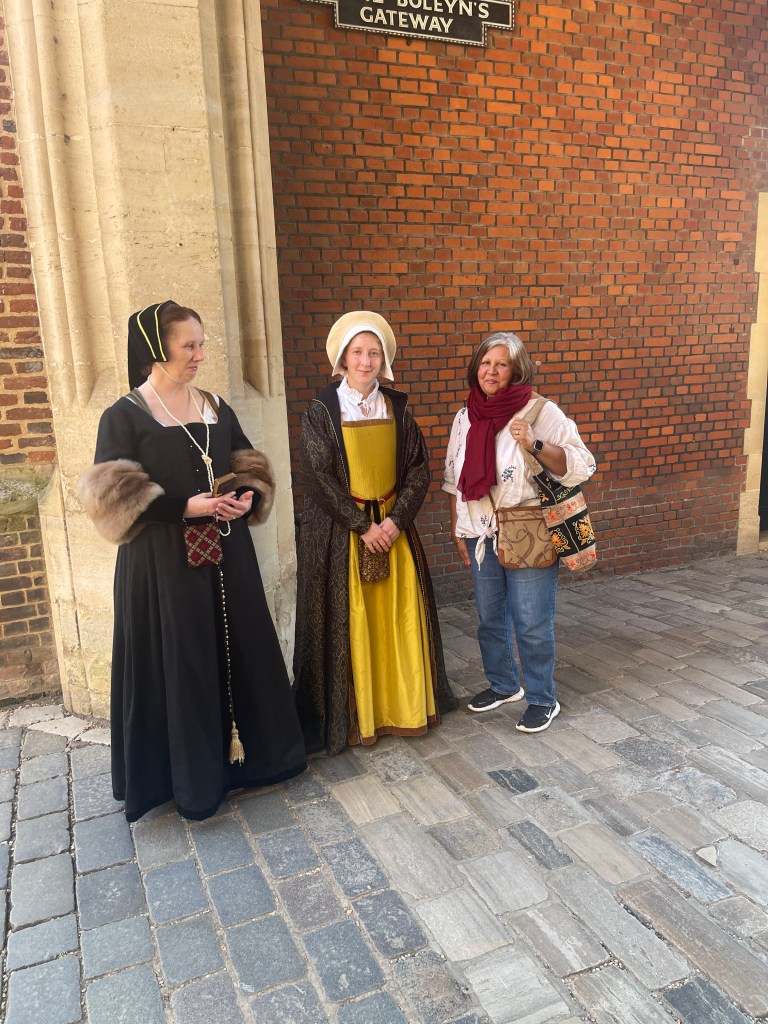
On a lighter note, I met some Tudor ladies and had a nice conversation with them. You can see them in the picture below. And the grandkids ended the day with a trip to the Magic Garden, which has all things to delight a child.




 Padmini Sankar Author