
.
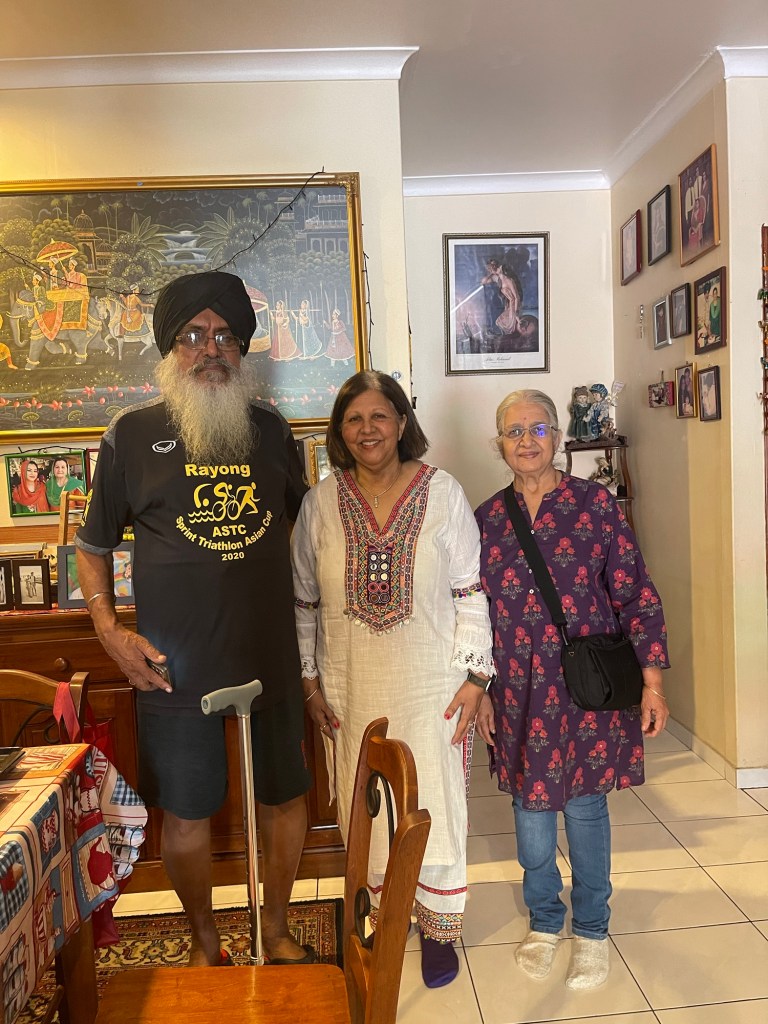
Ever since I was a child, I’ve been hearing stories from my (late) aunt of the turbulent times she underwent while living in Jesselton (present-day Kota Kinabalu) during World War 2, when the area was under Japanese occupation. I recently visited Kota Kinabalu to find out more, and was extremely lucky to meet a gentleman who’d not only lived through those war years but also remembered those times very well.
Datuk Balwant Singh Kler was just a young lad but recalls those days with utmost clarity. (‘Datuk’ is an honorary title in Malaysia conferrred on a person who distinguishes himself in his field, and in Balwant Singh Kler’s case, this was in Sports). He says the Japanese were ruthless towards those who they suspected of sympathising with the British. Most Indians supported Subhash Chandra Bose who openly defied the British, and many of the ex-soldiers of the British Indian army joined Bose’s Indian National Army. But the common people just wanted to survive, and kept their heads low, not openly defying the occupiers.
Life was hard, and every person eked out a living as best he or she could. Balwantji recalls that the only transportation was on cycle or on foot. Every time a local person saw a Japanese soldier or officer, they had to bow low. Food was in perenniel shortage. During the worst times, Balwantji recalls that his mother would grind tapioca which she’d mix with rice flour and make into ‘rotis’. A single roti kept their hunger at bay.
Balwant Singh had a couple of traumatic experiences. It seems the Japanese took away 75% of the locally grown food. His mother owned a few cows and chickens and also a small coconut plantation. She once refused to give the Japanese coconuts, and as punishment, she was tied to a tree near a nest of fire ants. A fire-ant’s bite is incredibly painful, and the poor lady suffered this torment for hours. Balwantji recalls that a local lady applied a salve of burnt tobacco leaves mixed with coconut oil, the only known cure for these bites.
If this sounds bad for a child of six or seven to witness, seeing his mother tortured in this fashion, something even worse was in store for him, an incident that haunted him for many years and affeced him both physically and mentally.
He had once taken their cows to a swampy area to hide them from the Japanese who’d otherwise confiscate them. It seems a lorry drove up, and some Japanese soldiers pushed out a Chinese man. Without realising a child was watching, they chopped off his head. Balwantji saw the blood spurt out and soiled his pants. Tthereafter, he says, for very many years, he had nightmares about this incident.
Balwantji also told me the heartwarming story of one of his friends meeting a Japanese soldier who hugged him and told him he reminded him of his son. The soldier had been a teacher who never wanted to fight this war, and was missing his family who he’d left far behind.
Even if we have not experienced war directly, someone in our family — a granddparent, an aunt or uncle– is usually the repositary of war tales. If you know any such stories, I’d love to hear them.
Until next time…
Padmini.



![The mother of all parties by [Padmini Sankar]](https://m.media-amazon.com/images/I/51KHdJZ3+QL.jpg)





 Padmini Sankar Author