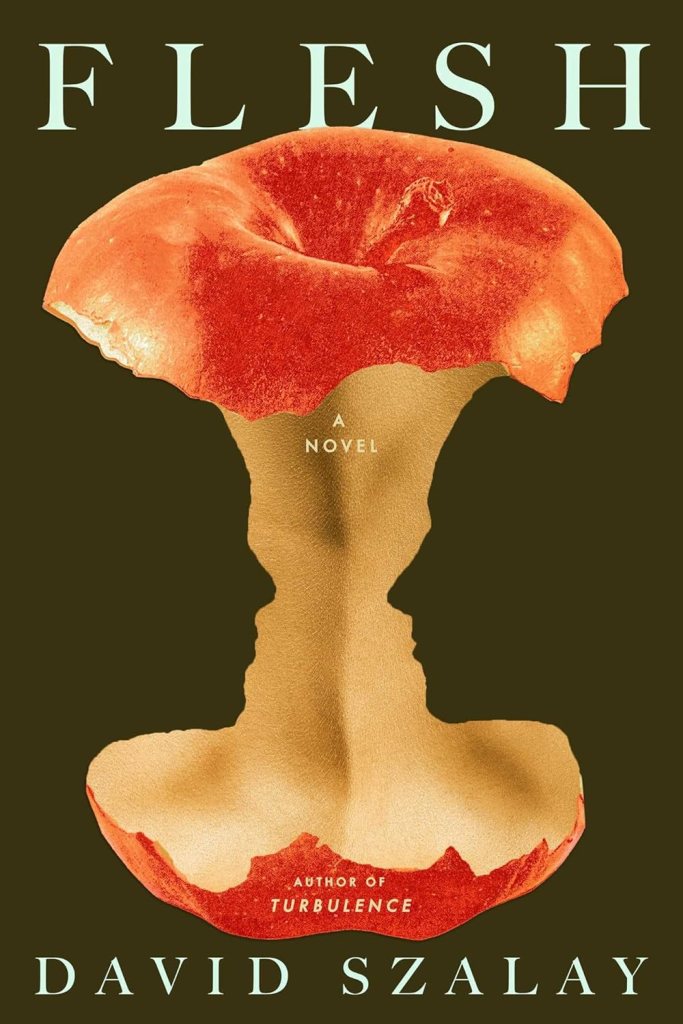
You know what they say about Booker Prize winners? You either love ‘em or you hate ‘em. So too with 2025 Booker winner Flesh.
For a start, it breaks all the rules of a novel..
The protagonist, Istvan, is not too likable. Initially, we do have some sympathy for him as we see how, as a young boy of 15, he’s seduced by a much older woman, but his later actions do not elicit any sympathy.
There is no character arc as such. istvan remains much the same. Rather unfeeling, no compunctions on using others for his own benefit, not very forthcoming (his favorite word seems to be ‘okay.’), very little introspection.
All the characters sound the same- Thomas, Istvan’s step-son, Jacob his real son— they speak like Istvan. So too the other characters, none of whom have distinct voices.
There’s more ‘tell’ than ‘show’ in this novel.
The protagonist is too negatively masculine.
However , what made me continue turning the pages of this book until I came to its very satisfying conclusion? Was it the spare prose that conveyed far more than exuberant words? Was it the staccato beat of the sentences, much like Hemingway’s, conveying just action? Perhaps because this book is so different from the novels I’ve read, perhaps because of the surprising turns in the plot, or maybe because the sentences were like the tip of an iceberg, conveying more beneath the surface than what is visible on top? Whatever it is, I ultimately enjoyed this book although I don’t think it’s for everybody.
Shortlisted for the 2025 Booker, this book has received a lot of praise as well as a lot of flak. There are two main criticisms of it.
It’s too long. (650 odd pages in my edtion)
It mocks Indians and their lifestyles. And this coming from an Indian American is especially vicious.
Now, I do believe point no. 1 has some weight. The novel sags somewhat in the late middle, and could definitely do with some pruning.
Point no. 2 is not true at all. The novel gives a realistic portrait of the deracinated Indian who feels neither at home in India or in the US ( where a large proportion of the educated Indian immigrants have made their home). If the book appears to criticize Indians, it is equally critical of North America.
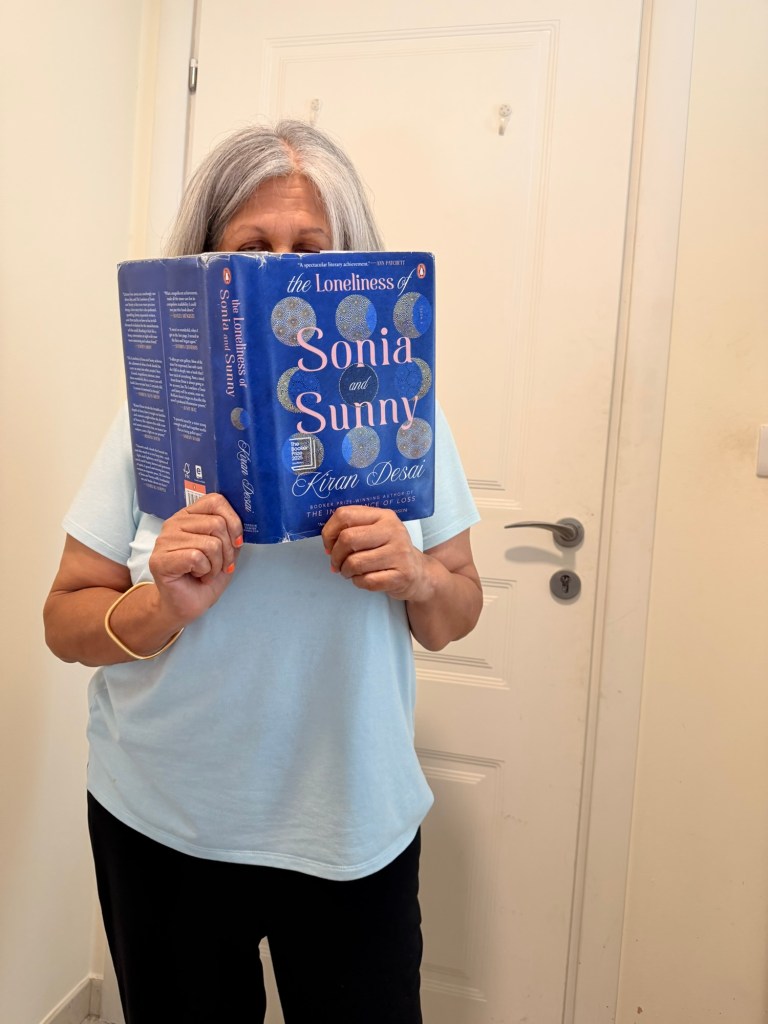
In my opinion, TLOSAS is a brilliant book that addresses the modern malaise of disconnect, and it does it beautifully, artistically and truthfully.
At its heart, this book is a love story about two young people, Sonia and Sunny, who know in their hearts they should be together but are separated by their own stubbornness and misunderstandings as well as by societal and family pressures. It’s a book that will stay with you as it speaks to your heart about basic human needs, of love and loneliness and the immigrant experience. What I especially love about this book are the different motifs used in it to tie it together- the kababs, the ocean, a ghost dog, and especially the mystical talisman of Badal Baba that plays such a prominent part in this novel. This touch of magical realism gives the story a new depth.
I am tired of reading clever, stylistic books that try to be different. The appeal of this book is that it is a good, old fashioned read, a Bildungsroman, a story in which you can get immersed, with an ending that is realistic, satisfying and complete.
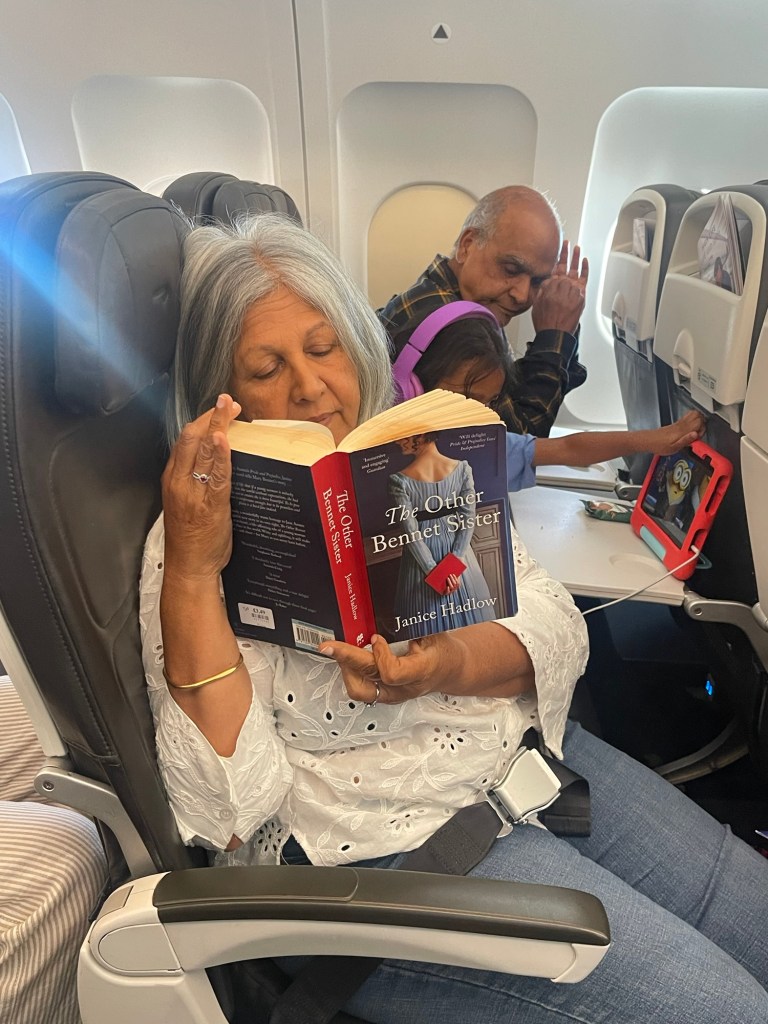
Me reading The Other Bennet Sister while traveling
The Other Bennet Sister by Janice Hadlow
Remember Mary Bennet, the moralizing middle sister in Jane Austen’s Pride and Prejudice? Honestly, I felt it was a little mean-spirited of JA to present her so unsympathetically. Dull, pompous, and lacking in social graces, she is the perfect foil for her more brilliant and colorful siblings.
However, come to think of it, Mary is a character who’d appeal to modern readers for the sheer fact that she doesn’t fit in. Janice Hadlow’s novel is based on her character as well as the other characters who appear in P and P, but we see her not as a caricature but as a real flesh-n-blood woman with feelings and desires, who gradually overcomes her own weaknesses to emerge a strong and likable individual. She’s presented as a character who’s slightly out of touch with reality and lacks self-esteem and confidence, as well as an inability to voice her real feelings. Janice Hadlow tackles her subject with sympathy, humour and elan.
I recommend this book on many counts. For a start, it uses some of the same minor characters who appear in P and P but makes them appear more human. For eg, the ridiculous Mr Collins is treated sympathetically, although Charlotte and Mrs Bennet are shown to be not very different from the original. But what I enjoyed the most was the development of Mary’s character whose changes are very slow; nothing is done in a hurry. Some readers may find the book dragged a bit but I enjoyed the slow burn. This is why, by the end of the book, we accept the new Mary who is actually far more to our liking than former favourites Elizabeth and Jane. Their struggles are trivial and shallow compared to Mary’s struggles.
Another aspect of the book that appealed to me was the language and style. It is so close to JA’s own ( in fact, some of the sentences are lifted straight from the original) that you’d think this is one of the author’s own lost works. I absolutely loved the wit and humour that is so reminiscent of JA’s.
Of all Jane Austen’s novels, Pride and Prejudice happens to be my favourite. There are many spin-offs of this novel both in books as well as movies. But until now, no one bothered about poor Mary Bennet. But she comes into her own in this novel. Remember Lydia, the scandalous younger sister who elopes with the cad Wickham? Perhaps now someone can present Lydia also in a new light.
If you love P and P or Jane Austen, this book is for you!
Chat symbol above vintage old book on blackboard background
So, your book is published. Your friends and family have dutifully bought it, read it and praised it.
Now, you ask them to write a review. A review? You can see the look of bafflement or confusion or just sheer annoyance on their faces. Wasn’t it enough that they bought your book and even read it? ( Dear writer, just be aware that many of your friends will buy your book to please you, but never get down to reading it)
No, dear reader, it is not.
Writers ask for reviews for one simple reason. Reviews sell books. It makes them better known. And the more the reviews, the better the sales. Reviews are in fact the life-blood of any writer.
A BOOK WITH 500 OR 5000 5-STAR REVIEWS, AND NO BAD REVIEWS IN SIGHT, ESPECIALLY BY A NEW OR UNKNOWN AUTHOR, MAY BE A SCAM; Ever picked up a book with five hundred five-star reviews, not even a four star review in sight leave alone three or two? And you find it meh? Well, dear reader, you’ve been scammed. This writer has probably bought reviews. Yes, you can do that. Pay x amount of money to get 50 or 100 or 500 5 star reviews. That’s the promise. It’s a temptation for every writer because it plays with the algorithm. Now, I am not mathematically or statistically inclined, but it seems these Amazon algorithms are an indication of the book’s popularity. But ask yourself, do readers even look at the statistics? And there’s another thing – being no. 1 on Amazon in a niche category like Predicting the Future through your Nostrils doesn’t mean a thing, except for giving the writer bragging rights. DISCLAIMER: This is not to say every debut with excellent reviews is necessarily a scam, but you do see the odd one here and there.
DON’T BUY REVIEWS: Now, I always wonder at the kind of writer who buys reviews. Don’t they have any confidence in their ability? Surely a few negative reviews shouldn’t make a big difference. And surely a reader is entitled to his or her opinion. Some may like it, some may not. Deal with it. But to actually buy reviews to boost yourself and your sales? Such things are short lived. Sooner or later you’ll be caught. And the repercussions are many — especially for future books.
WRITERS, CHOOSE NFLUENCERS AND BOOK BLOGGERS CAREFULLY:Coming to another point: Dear writer, you’ve sweated so much over your book, and all you friends and family have written their reviews. What’s next? Catch hold of influencers and book bloggers. Be careful who you select. they should be people who read in your genre or people who enjoy reading. And who write honest reviews. You don’t have to pay them. All you have to do is send your book along. And once that review is out, probably as a blog post or insta post, just hope that some of their followers buy your book. It doesn’t always work, but this is the next best thing you can do.
MANY ARE NERVOUS ABOUT WRITING REVIEWS, OR DON’T KNOW HOW TO:Talking again of reviews, perhaps many of your friends and family don’t have a clue about how to write a review .in that case, guide them. Tell them to write down what they liked about the book and what they didn’t like. Ask them to give you stars- if it’s very good, four or five stars. Explain that three Stars is average or below average. And surely your book does not merit just one or two stars, so don’t go there.
JUST KEEP AT IT! Now, every writer may get disillusioned by the entire review business. People may be reading your book but are too lazy or busy to write a review. Well, it’s something you have to live with. Only very famous writers get reviews in their thousands. And until you reach that exalted position, be humble, be realistic. But do everything in your power to promote your book, make it known without irritating people. And just hope those reviews keep coming!
The Italian Connection – books written by Italians or about Italy
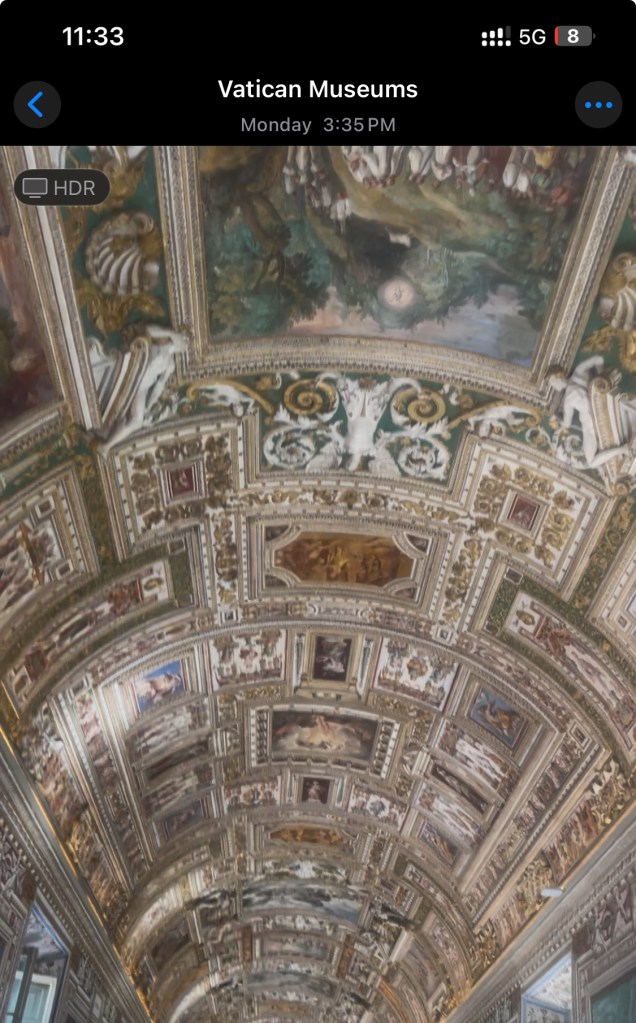
A visit to the Sistine chapel, the roof of which was painted by Michelangelo in the 16th century — took me back to books either written by Italians or set in Italy.
Italy is the stuff of literature and romance, of intrigue and murders. So here is a round-up of all the books I’ve read that have an Italian connection.
The Agony and the Ecstasy (1960) by Irving Stone. This author was all the rage when I was growing up, and his novel about Michelangelo started off my love affair with Italy.
The Name of the Rose by Umberto Eco. (1980)This book too is about church intrigue and has got a lot of flak for being pretentious and pseudo. But I remember being hooked by it.
My Brilliant Friend by Elena Ferrante. (2012) – a novel about female friendship and part of the Neapolitan series. Excellent.
The Da Vinci Code by Dan Brown. (2003) Now, I may be trolled by some for putting this author with some of the greats above. He’s been criticized for his clunky prose and historical inaccuracies . But his book’s become a massive worldwide bestseller, and makes me ponder whether readers are really concerned about the ‘writerly qualities’ of a novel.
Jhumpa Lahiri- ‘Whereabouts’ (2018) This author moved to Italy in 2012 and began writing in Italian. ‘Whereabouts’, originally written in Italian, is her first self-translated work. I loved it for its spare yet poetic style and how it goes deep into the unnamed narrator’s thinking process. Btw, Lahiri happens to be one of my fave writers.
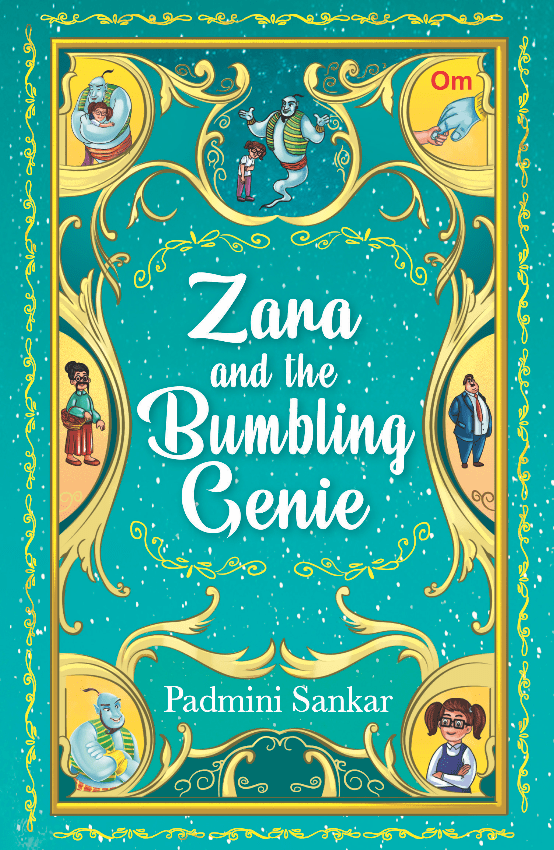
As you can see, Italy is the stuff of romance and intrigue. One of the characters in my recently published middle grade novel, Zara and the Bumbling Genie, has one Italian name. Can you tell me who it is? https://shorturl.at/9VgHF
What are some of the Italian authors you’ve read? I’d love to know in your comments.
Am I fated this year to read heavy tomes of over 700 or 800 pages? It appears so!
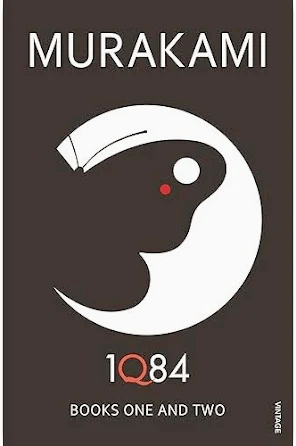
This book, 1Q84 parts 1 and 2 by Haruki Murakami is 805 pages long ( in my edition), in small print. . I haven’t yet picked up the third part. It took me an entire month and more to read, but let me tell you, this is one writer who takes you by your throat and makes you turn the pages. It’s riveting, robust, relentless.
At its heart is a love story- between the main characters Aomame and Tengo. But there’s more to it- a sinister cult, some crazy, unforgettable characters ( the editor, the insurance collector) and a big chunk of magic as well as sex thrown into the mixture.
I’ve never read anything like this before, and it’s hard to classify this book. Is it dystopian fiction, magical realism, literary fiction, or all three? But the voice is captivating and makes you read on and on. I’m hooked onto Murakami and look forward to Part 3 of 1Q84. And of course, his other books.
If you want to be challenged and move out of your comfort zone, pick this book.
In Zara and the Bumbling Genie, Padmini Sankar conjures a story that is as magical as it is moving, skillfully weaving together elements of fantasy and deep emotional truths. This is not just a children’s tale; it’s a luminous narrative that speaks to readers of all ages about resilience, compassion, and the true meaning of friendship.
At the heart of the story is Zara, a bright and courageous young girl facing the devastating challenge of losing her sight. But Zara’s world doesn’t shrink into darkness—rather, it expands with imagination and wonder when she encounters a genie unlike any other. Far from the omnipotent beings of legend, this genie is charmingly clumsy and endearingly human in his shortcomings. His magic doesn’t always work as intended, and his past is clouded with a mystery of lost powers and forgotten purposes.
Together, Zara and the genie embark on a quest that is as much internal as it is outwardly adventurous. The journey they undertake is laced with humor, danger, and tender moments of growth. Zara’s struggle with her impending blindness is portrayed with honesty and sensitivity, never descending into self-pity. Instead, her spirit of hope and determination becomes the guiding light of the story.
Sankar’s writing shines with a rare blend of simplicity and emotional depth. She captures the inner world of a child with authenticity and layers the fantasy with just enough realism to make the reader believe that genies and magic carpets might truly exist—if only we’re willing to see them with the heart.
What makes this story stand out is its unwavering focus on empathy and loyalty. The friendship between Zara and the genie is touching, built on mutual trust and the willingness to accept each other’s flaws. The genie’s arc—from a bumbling misfit to a being of renewed purpose—is subtly told, paralleling Zara’s own transformation from vulnerability to empowered agency.
The book also subtly addresses themes of disability and acceptance in a way that is uplifting rather than didactic. It doesn’t preach, but it teaches: that strength is often found in unexpected places, and that the loss of one ability can open doors to others—imagination, perception, kindness.
Zara and the Bumbling Genie is a beautiful, heartwarming tale that reminds us that true magic lies not in grand spells, but in the strength of the human (and genie) spirit. It’s a tale that lingers, inspiring young readers to be brave, to believe in second chances, and to see the world—and each other—with wonder and love.
Hi everybody, I’m starting this new blog about every book I’m reading this year and my views on it . The first book of the year:
A Little Life by Hanya Yanagihara
I normally never read any book over 500 pages in length, and that’s stretching it. So I’d been avoiding A Little Life which goes up to 814 pages, but because my book club chose it as our next read— well, there you are.
The story is about four college friends and their lives for the next three or so decades, but the focus is mainly on two, Jude and Willem. Especially Jude, the main character, who’s been sexually abused as a child.
This book is not your typical novel and breaks quite a few rules. For one, there’s a lot of tell; two, there are no filters regarding some of the more sordid scenes, and three- it’s darned length! Novels have to be around 80-100,00 words long to keep the reader’s interest from flagging, we are told. But this one kept me hooked for all 814 pages and I stayed up until 5 am to finish it!
What was it about this novel that made it so gut- wrenchingly unputdownable? ( I hate using that word as it’s got such a commercial zing to it, but can’t think of any other). Well, here we go.
The subject matter of child sexual abuse was dealt with honestly. It’s horrifyiong, but it’s true. Such things do happen. The author’s use of the third person close POV enabled her to go right into the heart and soul of the character. Her writing was without any kind of judgement or sentimentality. And she was not afraid of writing about feelings and emotions. I think emotions are such a large part of our lives and many authors don’t want to appear sentimental and maudlin so merely skim over these issues. But not this author.
Published 10 years ago to critical acclaim, the book has valuable lessons for all of is. And it shows us life can be beautiful.
Ever since I was a child, I’ve been hearing stories from my (late) aunt of the turbulent times she underwent while living in Jesselton (present-day Kota Kinabalu) during World War 2, when the area was under Japanese occupation. I recently visited Kota Kinabalu to find out more, and was extremely lucky to meet a gentleman who’d not only lived through those war years but also remembered those times very well.
Datuk Balwant Singh Kler was just a young lad but recalls those days with utmost clarity. (‘Datuk’ is an honorary title in Malaysia conferrred on a person who distinguishes himself in his field, and in Balwant Singh Kler’s case, this was in Sports). He says the Japanese were ruthless towards those who they suspected of sympathising with the British. Most Indians supported Subhash Chandra Bose who openly defied the British, and many of the ex-soldiers of the British Indian army joined Bose’s Indian National Army. But the common people just wanted to survive, and kept their heads low, not openly defying the occupiers.
Life was hard, and every person eked out a living as best he or she could. Balwantji recalls that the only transportation was on cycle or on foot. Every time a local person saw a Japanese soldier or officer, they had to bow low. Food was in perenniel shortage. During the worst times, Balwantji recalls that his mother would grind tapioca which she’d mix with rice flour and make into ‘rotis’. A single roti kept their hunger at bay.
Balwant Singh had a couple of traumatic experiences. It seems the Japanese took away 75% of the locally grown food. His mother owned a few cows and chickens and also a small coconut plantation. She once refused to give the Japanese coconuts, and as punishment, she was tied to a tree near a nest of fire ants. A fire-ant’s bite is incredibly painful, and the poor lady suffered this torment for hours. Balwantji recalls that a local lady applied a salve of burnt tobacco leaves mixed with coconut oil, the only known cure for these bites.
If this sounds bad for a child of six or seven to witness, seeing his mother tortured in this fashion, something even worse was in store for him, an incident that haunted him for many years and affeced him both physically and mentally.
He had once taken their cows to a swampy area to hide them from the Japanese who’d otherwise confiscate them. It seems a lorry drove up, and some Japanese soldiers pushed out a Chinese man. Without realising a child was watching, they chopped off his head. Balwantji saw the blood spurt out and soiled his pants. Tthereafter, he says, for very many years, he had nightmares about this incident.
Balwantji also told me the heartwarming story of one of his friends meeting a Japanese soldier who hugged him and told him he reminded him of his son. The soldier had been a teacher who never wanted to fight this war, and was missing his family who he’d left far behind.
Even if we have not experienced war directly, someone in our family — a granddparent, an aunt or uncle– is usually the repositary of war tales. If you know any such stories, I’d love to hear them.
The ‘friend’ rang me up for a chit-chat. We used to meet socially, and although she was not among my closest pals, she was part of the group of who I was a member, and we’d meet occasionally.
Like others living in Dubai, I too have a ‘social milieu’, a group of friends who I hang out with and meet for coffee or for dinner once in a way. Good company, but, barring a few, not people to whom you could open your heart.
Usually, this friend and I exchanged forwarded jokes on WhatsApp, and ‘liked’ each other’s’ pictures and messages on FB. It was rare that we actually talked to each other on the phone, but given the exceptional times we’re living in, and the extra hours we all tend to have, it seemed natural for her to call.
After the usual pleasantries, she started off: of how terrible things were in the world, of how the vaccine would take a couple of years to find, of how we can’t go out, can’t travel, etc, etc.
When I gently reminded her that things were not so bad, and 80 per cent of the people who caught the virus showed mild symptoms, and only 5 per cent developed death-threatening ones, she somehow convinced me that I was among that 5 per cent.
After a harrowing half-hour, I put the phone down, much worse for the call, a jiggling jelly of fear and negativity.
Have such a friend? I’m sure you do. These are the prophets of doom and gloom, the ones who can never see the positive in any situation. They are ubiquitous, such people.
They may be among your friends, they may be in your WhatsApp groups, or they may even be a close relative! Woe betide the individual with a spouse who’s the harbinger of bad tidings, and who seems to relish giving bad news. There’s no way to avoid such a person too, living under the same roof.The best you can do is to inject some positivity into their doomsday prophecies, or else, just turn a deaf ear.
The question is, why do people do this? I think the answer lies in wanting to project. In psychological terms, “projection refers to unconsciously taking unwanted emotions or traits you don’t like about yourself and attributing them to someone else.” (Karen R. Koenig)
Projecting your fears and insecurities on another individual seems to lighten your burden. But hey, buddy, spare me! Find someone else to vent all your fears and frustration.
In contrast, there are some friends who make you happy and cheerful. They are not blasé about the seriousness of the present situation, nor do they underplay it. But they don’t keep harping on the number of dead, the high rate of infection, and the state of the world’s plummeting economy. Keep such friends close.
They talk about other things too, of books they’ve read and music they listen to, even some juicy gossip to brighten your day. Conversation is light and fresh, not deep and heavy.
A friend of mine on Twitter, who is an excellent photographer, always puts up pictures of the sun rising over an urban landscape, or flowers in bloom, or birds flitting around, usually with a happy caption. Such photos lift the heart and spirit. Needless to say, talking to her is also a pleasant interlude in an otherwise dull day.
These are, indeed, stressful times, but, as the old saying goes, ‘what can’t be cured must be endured.’ But at least learn to choose your friends wisely, the chirpy, happy ones, and keep the doomsayers and naysayers at bay.
Soon, this will all be over and we’ll look back on these times as either a blip or a learning curve in our lives. Keep smiling!
— Padmini B. Sankar is a Dubai-based freelance writer and author of the forthcoming book, “The Mother of all Parties”. Twitter: @paddersatdubai





 Padmini Sankar Author